

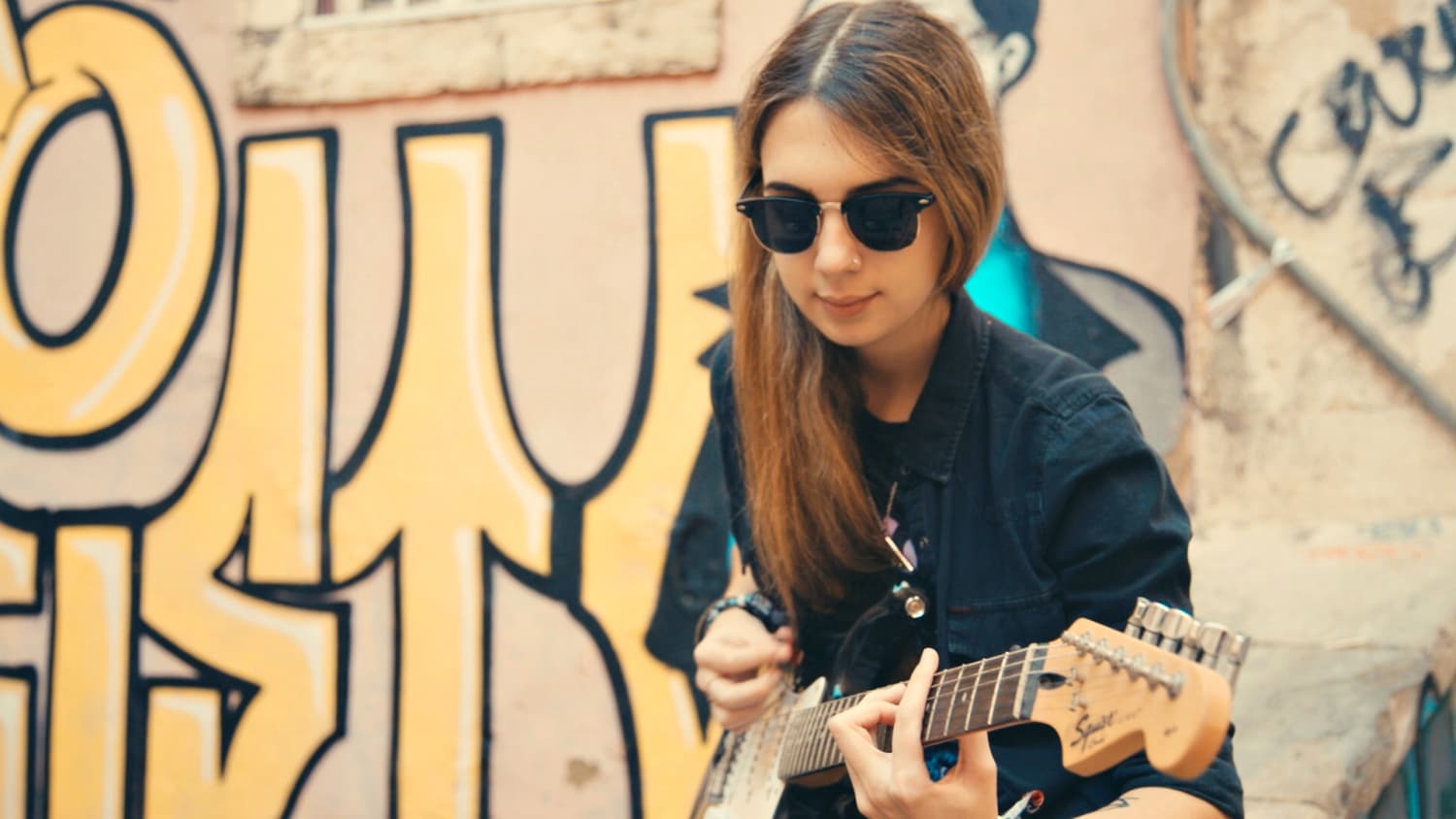
5 Tips to Become a Better Improviser
Last Edited: Oct 31, 2023
Improvisation is a complex but impressive skill to accomplish. There is rarely a musician who does not struggle with it. The learning curve for each musician is different. Some stumble upon improvisation a little earlier in their journey and some later, but everyone does go through this phase. Here are five tips that can help you improvise better:
Know the Fundamentals
As there are no shortcuts in life, there are no shortcuts for improvising. You cannot just start playing random notes and expect it to sound good. Knowing the basic scale and chord theory is quintessential for good improvising. Almost all solos we hear are played using specific notes that come under a particular scale. Also, a varying chord progression is played under the solo to support it. Sometimes, the solos are played according to the chords, and vice versa. In both cases, a musician must be well-versed in chord theory to improvise easily.
Don’t Be Afraid to Make Mistakes.
A good musician who is not a great improviser thinks, I will practice each piece until I become perfect at it and play no wrong note because playing a wrong note is the worst thing a musician can do. A good improviser thinks: I will try and play every note possible over this chord progression to see what works. I will make mistakes and learn from each wrong note. Making mistakes and learning from them is an essential skill an improviser should possess. Trying new things makes you confident about what to play and extends your abilities.
Audiation
Audiation is a skill where a musician can listen to and perform a musical idea on their instrument. This skill is one of the building stones of a better improviser. The ability to hear a musical opinion over a chord change and perform it instantly is what an improviser requires; trust me, it is not easy. To develop this, two practices help;
- Sing along with what you play.
- Try to imagine simple melodies and play/ sing them
Slow Things Down
If you are new to this field, place two chords in every bar at 120 bpm. The chord changes will be too fast for you to analyze and improvise. Instead, the same thing is played at 60 bpm; the chord changes will be much more apparent, and you will have more time to think and play. Hence, just Slowing things down at first can make a lot of difference. This will also improve your ear training ability; slowly, you will start recognizing fast chord changes.
Share and Collaborate
Music is primarily a social art form. Practicing alone is also essential because. It helps to perfect different skills. However, collaborating and sharing music with people is also very important. Once in a while, you should get together with other musicians and just jam. The learning curve of doing this live with a real musician instead of a machine is fantastic. You learn so much. You get motivated by the other person and get many new ideas, too.
MASTER MUSIC PRODUCTION
Expert-led courses designed to take you from fundamentals to finished tracks.

HOUSEFrom bouncy bass and solid kicks, this course teaches you the most modern House music production techniques needed to succeed and stand out.
TRAPQuit sounding like generic Trap and produce something World with hints of the Far East. Create ethnic soundscapes to put your Trap ahead of the curve.

AMBIENTProduce relaxing, sophisticated psy-influenced ambient. Psychedelic and relaxing to listen to, create meditative soundscapes to put your listeners in Zen.