

Affordable Remote Production Tools for Indie Musicians
Last Edited: Aug 3, 2026
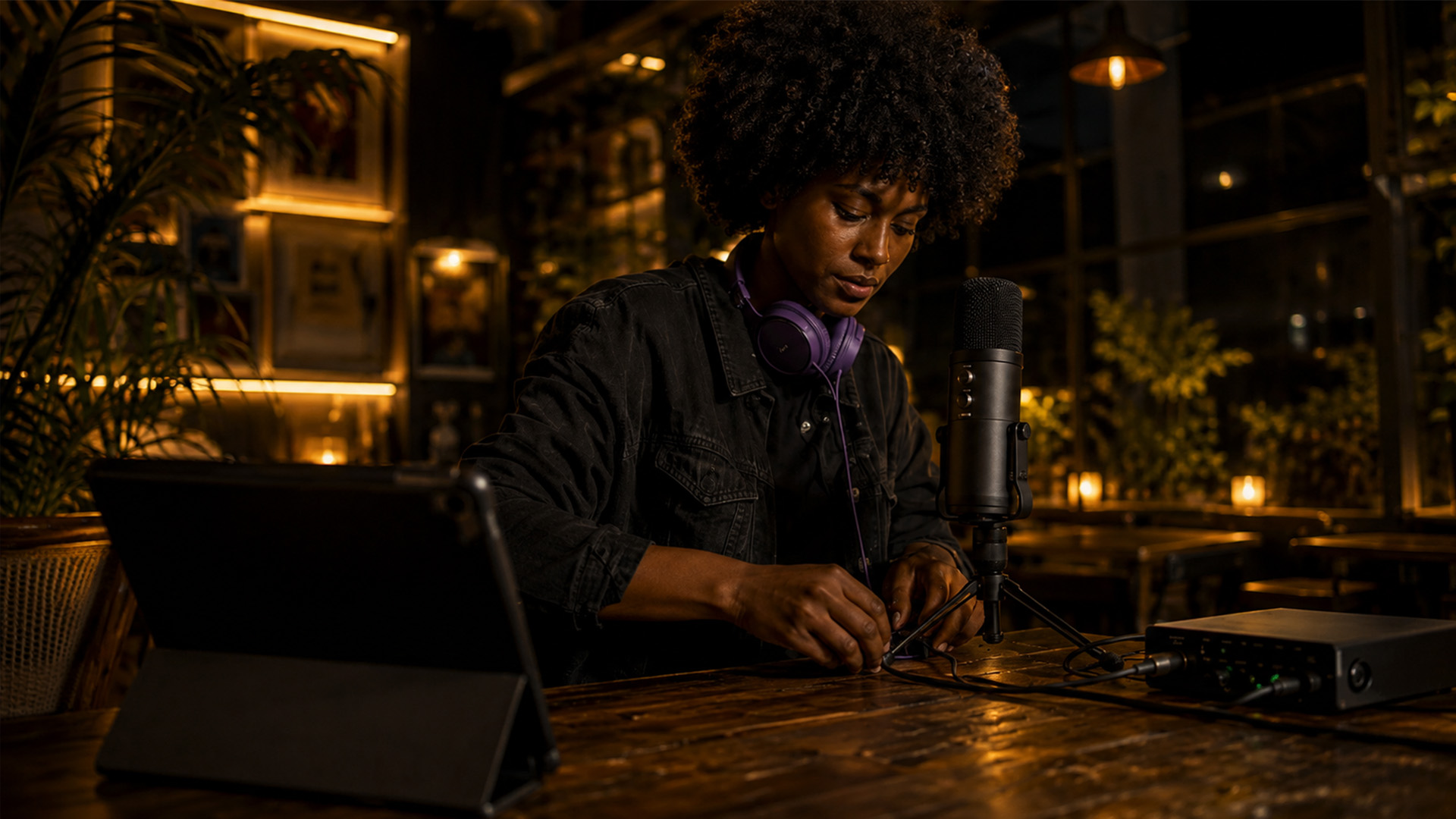
The most cost-effective remote production stack for independent musicians and small teams right now combines a browser-based or cloud production layer, SoundBridge as your DAW, and compact hardware only when your workflow genuinely demands it.
The core principle: Pay for minutes used, not for gear that sits idle. Usage-based cloud tools plus a zero-latency DAW like SoundBridge keep your budget tight without sacrificing studio-quality results.
Why this approach works:
- Usage-based billing means you only pay during active sessions, not between them.
- Browser-native tools cut setup time from days to minutes and eliminate shipping costs.
- SoundBridge's free tier lets you test zero-latency remote tracking before spending a dollar on a paid plan.
What Types of Affordable Remote Production Tools Should You Know?
Budget remote production gear falls into four categories, and knowing which one solves your problem saves you from buying the wrong thing.
Cloud/browser production suites (Tunio, Open Live, Castr) run entirely in a browser tab. No install, no encoder box. Setup takes minutes, and cost is either subscription-based or tied to usage minutes. The trade-off: you depend on a stable internet connection, and browser audio latency is higher than a native DAW.
Cloud DAWs and collaboration DAWs (SoundBridge) run natively on Mac or Windows and handle the audio-critical side: zero-latency tracking, plugin control, and high-fidelity recording up to 192kHz. These are the right tool when audio quality and real-time performance are non-negotiable.
Compact hardware switchers like the Blackmagic ATEM Mini and the YoloLiv YoloBox Pro combine multi-camera switching, recording, and streaming in a single portable unit. They cost a fraction of a broadcast console and add on-site reliability that browser tools cannot match. The YoloBox Pro even runs without a computer, fitting in a backpack with 4G LTE and a built-in battery.
Budget audio interfaces are the physical bridge between your microphone or instrument and your DAW. A solid entry-level interface costs $50–$150 and is the single highest-impact hardware upgrade for any remote audio workflow. Learn more about how audio interfaces improve collaboration before you buy.
On open-source options: Open Live is free, browser-runnable, and self-hostable on Kubernetes, making it a genuine zero-license-cost path for teams comfortable with cloud infrastructure. LiveU Studio offers a two-week free trial with usage-based billing, so you can test multi-cam cloud production before committing.
Which Setup Fits Your Scenario?
Solo creator
Minimum components: a budget audio interface, a condenser or dynamic microphone, and either SoundBridge (free tier) or a browser studio like Tunio. Setup time: one to two hours, including account creation and a test recording.
Small band or remote tracking session
This is where cloud-based music production pays off most clearly. Each musician uses a local audio interface for capture; SoundBridge handles session sync and zero-latency routing across locations. Key latency mitigation steps:
- Run a bandwidth test before every session (aim for at least 10 Mbps upload per participant).
- Use wired Ethernet instead of Wi-Fi wherever possible.
- Confirm WebRTC or SRT support in any browser layer you add. High-latency protocols like RTMP or HLS are unsuitable for real-time music performance.
- Set a shared click track or reference mix in SoundBridge before recording begins.
Budget estimate: a moderate total for interfaces across the band, plus SoundBridge's paid tier if you need advanced collaboration features.
Remote Live Production (Multi-Camera or Streaming Shows)
For recurring live shows, a cloud production platform lets a single operator switch between multi-cam feeds, manage guest contributions, and distribute to multiple destinations from a browser, significantly reducing staffing and travel costs. Add an ATEM Mini or YoloBox Pro on-site when you need hardware reliability or when a guest's local network is unpredictable. Sending a preconfigured broadcast kit to remote talent (PTZ camera, lavalier mic, flicker-free LED) consistently yields better results than relying on guest-supplied consumer gear.
Budget estimate: cloud production tiers can be up to $100 per month, with several hundred dollars one-time for compact hardware if needed.
How Do You Choose the Right Affordable Remote Production Setup?
Before you spend anything, run through this checklist:
- Budget shape: Do you have a one-time budget, or can you absorb a monthly fee? Usage-based billing suits irregular schedules; subscriptions suit weekly shows.
- Latency requirement: Real-time music tracking demands sub-30ms round trip. Asynchronous collaboration (file exchange, stem sharing) tolerates any latency.
- Platform compatibility: Confirm Mac or Windows support for any DAW; browser tools work on either.
- Collaboration features needed: Talkback, shared session view, plugin control, and file sync are not universal. SoundBridge natively includes integrated talkback and bidirectional plugin control.
- Backup plan: What happens if the cloud platform goes down mid-session? Always have a local recording running in parallel.
Red flags to avoid: Opaque usage fees with no cap, platforms that lack WebRTC or SRT support, no sandbox or trial period, and vendors who require long-term hardware purchases before you can test the software.
Questions to ask before committing: Can you run a sample session on the free tier? What is the failover if your primary stream drops? Does the platform support the sample rate your project requires?
What Do These Tools Actually Cost?
The biggest cost shift for independent creators is moving from always-on infrastructure to on-demand browser tools, so you pay only for the minutes you use
| Pricing model | Typical cost range | Best for | Key trade-off |
|---|---|---|---|
| Free/open-source | Free (Open Live, SoundBridge free tier) | Testing, solo projects | Limited features or self-hosting effort |
| Usage-based (pay-per-minute) | Varies by platform; LiveU Studio trial is free for 2 weeks | Irregular live shows | Costs spike during high-volume months |
| Monthly subscription | $0–$100/month for browser tiers | Regular weekly workflows | Idle spend if sessions are infrequent |
| One-time hardware | $300–$800 (ATEM Mini, YoloBox Pro range) | On-site reliability, multi-cam | Upfront capital; no ongoing fee |
Pro Tip: Start with free tiers and trials before any paid commitment. Run at least two full-length test sessions on a free plan to surface latency or feature gaps before you pay.
LiveU Studio's two-week trial and Open Live's open-source access are the lowest-risk entry points for live production. For DAW-side work, SoundBridge's free tier covers core recording and editing without a credit card.
Why SoundBridge Fits Your Affordable Remote Production Workflow
SoundBridge is built for exactly the hybrid stack described here. Its zero-latency remote tracking and studio-accurate synchronization handle the audio-critical layer that browser tools cannot. Integrated video and talkback mean you do not need a separate video call running alongside your session. And because it runs natively on both Mac and Windows, it slots into whatever hardware you already own.
Where SoundBridge replaces expensive parts of the stack: you do not need a separate talkback hardware unit, a standalone video sync tool, or a third-party plugin controller. Those are built in. For remote music collaboration, that consolidation alone can save hundreds of dollars in software licenses.
“Zero-latency remote tracking with studio-accurate synchronization means every collaborator hears the same mix at the same time, regardless of location.” — SoundBridge feature documentation
Pro Tip: Route your audio interface output into SoundBridge for local capture, then use a browser studio (Tunio or Open Live) as your streaming/switching layer on top of it. SoundBridge handles the session; the browser tool handles distribution. You get studio audio quality and live production flexibility without doubling your software spend.
Your 10-Step Quick-Start Checklist for a First Remote Session
Before you press record: A five-minute preflight check prevents 90% of session failures. Skipping it is the most expensive mistake indie teams make.
- Test your upload and download speeds (minimum 10 Mbps per participant).
- Switch all participants to wired Ethernet if possible.
- Update firmware on your audio interface and drivers on your DAW machine.
- Create accounts and activate free tiers: SoundBridge, Open Live, or LiveU Studio trial.
- Set your DAW buffer size low (128 samples or below) for real-time tracking.
- Confirm WebRTC or SRT is active in your browser production layer.
- Set input levels on all interfaces; aim for peaks around -12 dBFS.
- Test talkback with every remote participant before the session starts.
- Run a full dress rehearsal at session length, recording locally as a backup.
- Confirm your failover plan: a phone hotspot, a secondary recording device, or a direct file-share fallback.
Pro Tip: Save your SoundBridge session template after the first successful run. Reload it for every future session, and you cut setup time to under 15 minutes.
Key Takeaways
The most cost-effective remote production approach pairs usage-based cloud tools with SoundBridge's zero-latency DAW, adding compact hardware only when on-site reliability demands it.
| Point | Details |
|---|---|
| Start with free tiers | SoundBridge's free tier and LiveU Studio's two-week trial let you validate your workflow before spending any money. |
| Usage-based billing saves money. | Pay-per-minute cloud tools eliminate idle spend between sessions for irregular schedules. |
| Hardware only when needed | ATEM Mini and YoloBox Pro add reliability for multi-cam shows; skip them for audio-only remote sessions. |
| WebRTC/SRT is non-negotiable. | Real-time music tracking requires low-latency protocols; RTMP and HLS introduce too much delay. |
| SoundBridge as your DAW layer | Zero-latency tracking, integrated talkback, and 192kHz support replace several standalone tools on a single platform. |
The Case for Going Lean Before Going Big
Most indie teams overspend on remote production because they buy the full stack before they understand their actual bottleneck. A $700 hardware switcher does nothing for your mix if your audio interface is a $20 USB dongle. A premium cloud subscription is a waste if your sessions run only once a month.
The smarter move: start with the free tier of your DAW and a browser production tool, run real sessions, and let the friction points tell you what to upgrade. Nine times out of ten, the first real upgrade is a better audio interface, not more software. The second is a paid DAW tier for collaboration features. Hardware switchers come third, and only if you are running live multi-camera shows with any regularity.
Scaling up to paid or hybrid solutions makes sense when your session frequency justifies a subscription over usage billing, or when guest hardware variability is costing you retakes and edit time. At that point, either a preconfigured kit for remote talent or a compact on-site switcher quickly pays for itself.
SoundBridge Gets You Producing Remotely Today
Zero-latency remote tracking, integrated video and talkback, and native Mac/Windows performance make SoundBridge the DAW that fits every affordable stack described here, without adding complexity or cost. You get studio-accurate synchronization, bi-directional plugin control, and support for up to 192kHz, all in one platform with a free tier you can start on right now.
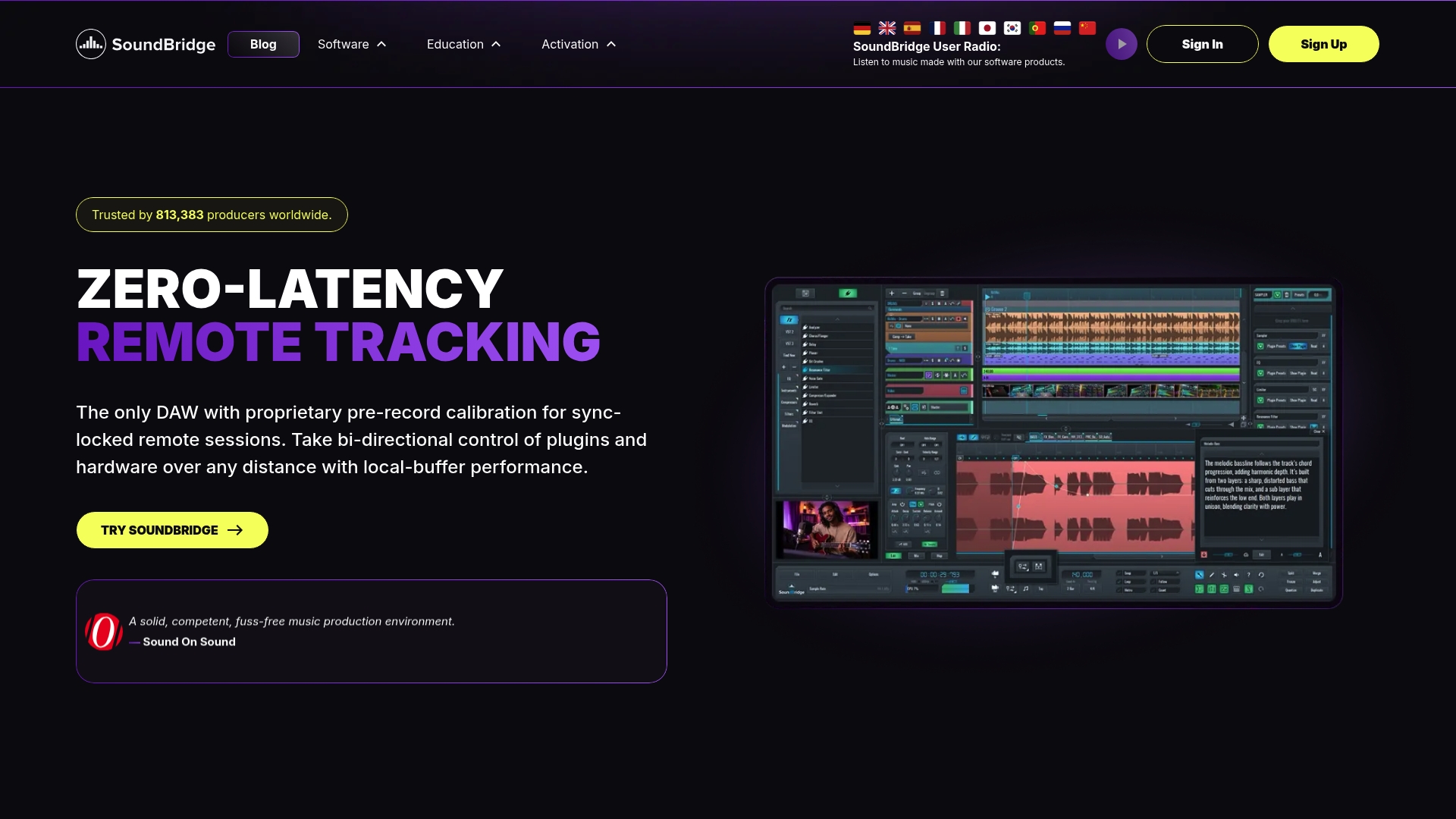
Whether you are a solo creator building your first remote setup or a small band tracking across cities, SoundBridge covers the audio-critical layer so your browser tools and compact hardware can focus on what they do best. Read the complete DAW guide to understand how it fits your workflow, or go straight to the virtual collaboration features to see zero-latency tracking in action. The free tier requires no credit card.
Useful Sources and Free Options to Try
- Open Live — free, open-source, browser-runnable cloud production platform; self-hostable on Kubernetes.
- LiveU Studio — two-week free trial; usage-based multi-cam cloud production.
- Blackmagic ATEM Mini — compact hardware switcher; compare models and pricing before buying.
- YoloLiv YoloBox Pro — all-in-one portable switcher with 4G LTE; no computer required.
- Tunio Broadcast Studio — full browser studio with built-in mixer, guest links, and rehearsal mode.
- SoundBridge free tier — start with zero-latency remote tracking and core DAW features at no cost.
Run at least two full-length test sessions on any free or trial plan before committing to a paid tier. Real sessions surface problems that demos never show.
Recommended
MASTER MUSIC PRODUCTION
Expert-led courses designed to take you from fundamentals to finished tracks.
HOUSEFrom bouncy bass and solid kicks, this course teaches you the most modern House music production techniques needed to succeed and stand out.
TRAPQuit sounding like generic Trap and produce something World with hints of the Far East. Create ethnic soundscapes to put your Trap ahead of the curve.
AMBIENTProduce relaxing, sophisticated psy-influenced ambient. Psychedelic and relaxing to listen to, create meditative soundscapes to put your listeners in Zen.