

Collaborative Beat Making: Your 2026 Remote Producer Guide
Last Edited: Jul 20, 2026
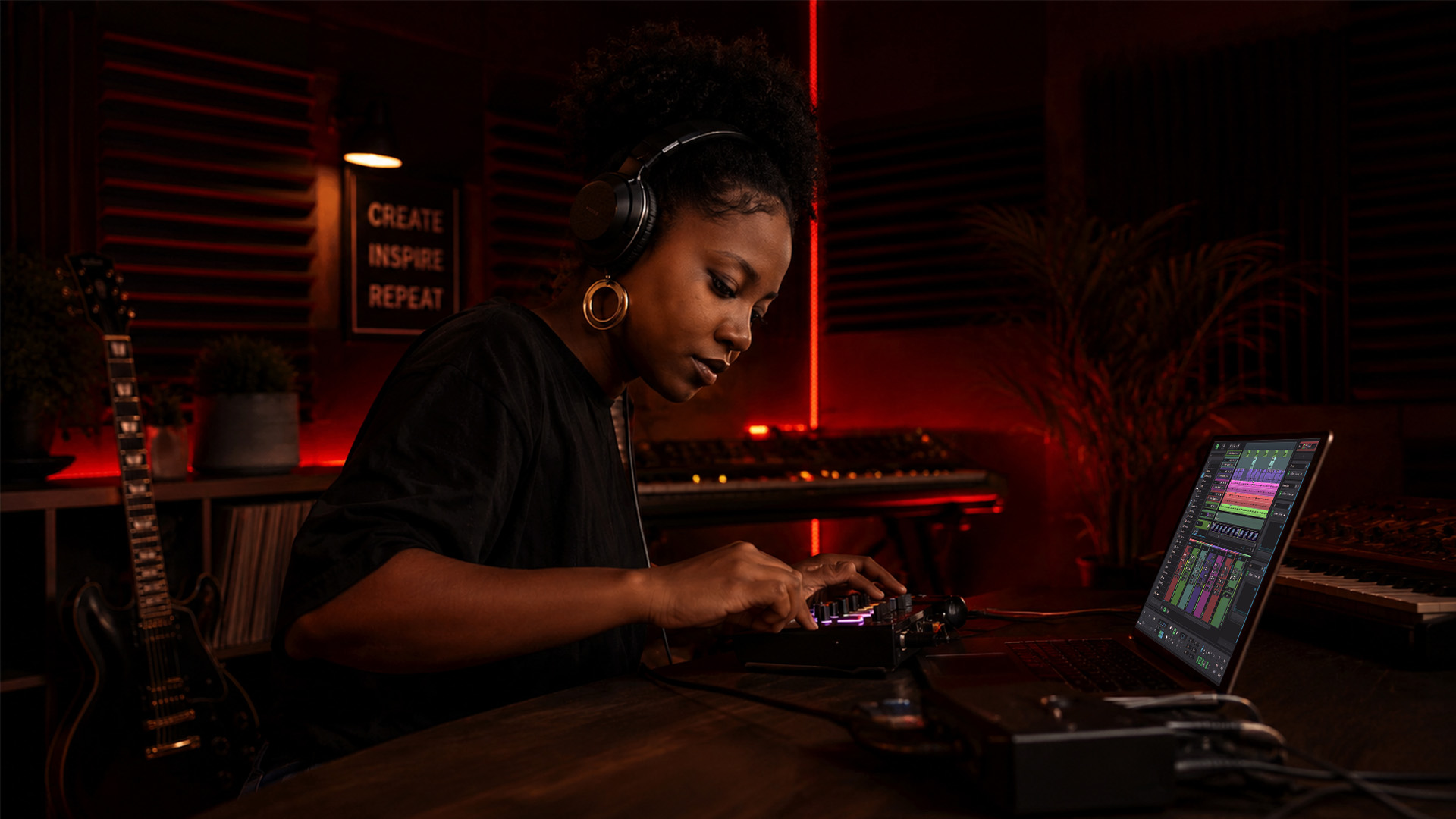
Collaborative beat making is the process where multiple producers work together, remotely or in real time, to build music using shared tools, synchronized workflows, and clearly defined roles. The industry term for this practice is remote co-production, which encompasses everything from live browser sessions to asynchronous stem exchanges. Producers today no longer need to share a physical studio. Cloud-based production has shifted the standard workflow toward online environments where geography is irrelevant, and creativity is the only limit. This guide covers the best tools, workflows, technical practices, and emerging trends shaping joint music creation in 2026.
What Are the Leading Tools for Collaborative Beat Making in 2026?
Browser-based DAWs are the most accessible entry point for online beat collaboration. The best platforms let up to 4 producers jam simultaneously with latency below 80ms and integrated voice chat, no downloads required. That sub-80ms threshold is the practical ceiling for real-time musical interaction. Above it, the timing feels off, and creative momentum breaks down.
Real-time browser studios currently operate in private beta with waiting lists. Private beta groups of 200+ producers are testing these platforms, with public release expected in late 2026. That scale of testing signals genuine demand, not just hype.
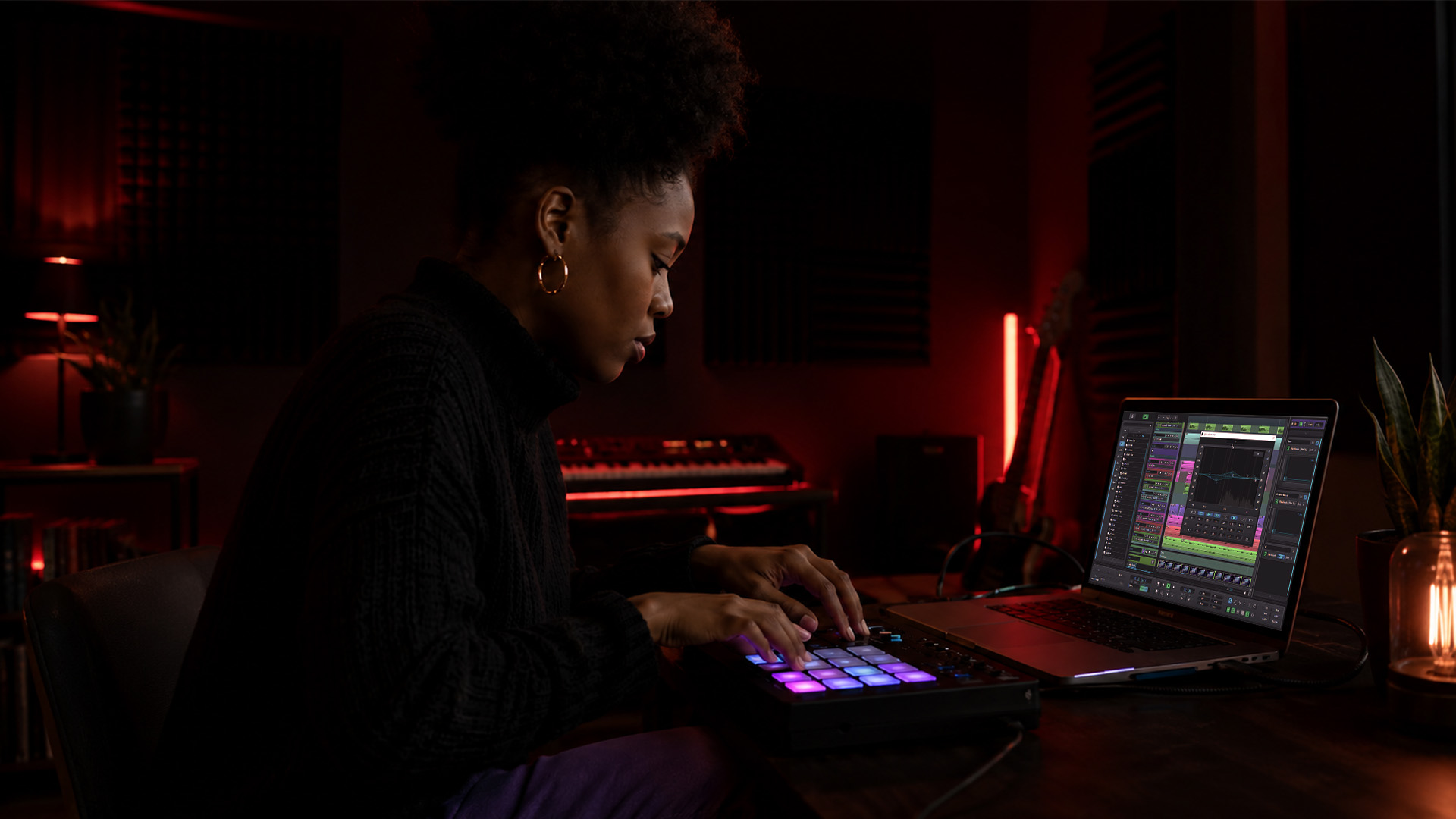
Asynchronous tools fill the gap for producers who cannot schedule live sessions. These workflows rely on stem exchanges, bounced audio files, and project packages shared over platforms like Discord. The process is slower but more flexible, and it works across any time zone.
AI-assisted production tools add a third category, though they carry a significant limitation. AI music tools lack multi-user support, forcing collaborators to rely entirely on asynchronous file sharing or “extension” workflows. That means manually bouncing and stitching tracks rather than editing together in real time.
Key features to look for in any collaborative music tool:
- Track-level locking: assigns exclusive edit permission per track to prevent accidental overwrites
- Role assignments: labels like “drums,” “melody,” or “mix” clarify who owns what
- Session metadata: logs contributions for credit tracking and publishing
- Auto-credit splits: proportional earnings assignment based on session input
- Integrated voice and text chat: keeps communication inside the session, not scattered across apps
Pro Tip: Before committing to any platform, test its latency with a collaborator in a different city. A tool that performs at 60ms locally may spike to 150ms across regions, which kills real-time groove.
Which Workflows Make Remote Beat Sessions Actually Work?
The most effective remote co-production sessions run on clearly assigned roles. Role definition with track-level locking prevents project corruption by giving one producer edit permission per track during live sessions. Think of it like a relay race. Each runner owns their lane. Nobody crosses over unless the baton is passed.
Real-time jamming works best when each producer owns a specific sonic layer. One producer handles drums and percussion. Another builds the melodic top line. A third manages the mix bus and effects chain. This structure keeps creative decisions fast and prevents the paralysis that comes from too many hands on the same fader.
Asynchronous workflows use a different structure called baton-passing. Artists invented baton-passing and wrapper techniques to stitch multi-origin stems into cohesive pieces. One producer builds the foundation, exports stems, and passes them to the next collaborator, who adds their layer and passes it forward. The result is a layered composition built across time zones and schedules.
Session leadership is non-negotiable for larger groups. Effective collaboration requires a clear host or lead role to maintain sonic vision and manage creative direction. Without a designated decision-maker, sessions drift. The lead producer sets the BPM, approves structural changes, and resolves creative conflicts before they stall the project.
A practical workflow structure for remote sessions:
- Set the BPM, key, and reference track before anyone opens a session
- Assign roles and lock tracks before the first note is played
- Use integrated voice chat for real-time decisions, not a separate app
- Commit to a stem export format (WAV, 24-bit, labeled) before passing files
- Log every session with timestamps and contribution notes for credit tracking
Pro Tip: Keep a shared document with the session’s creative brief. One sentence describing the vibe, the BPM, and the key saves 20 minutes of back-and-forth at the start of every call.
What Technical Practices Improve Remote Beat Quality?
Latency is the single biggest technical barrier in online beat collaboration. The most effective solution is control-signal synchronization, in which MIDI notes and parameter commands travel over the network rather than raw audio streams. Audio is synthesized locally on the host machine, which cuts round-trip latency to as low as 50ms. That is fast enough for real-time musical response.
The server in a well-built real-time system acts as the single source of truth. The host controls tempo and transport, player inputs snap to the beat grid, and audio is mixed on the host device using the Web Audio API. This architecture keeps everyone locked to the same clock, which is the foundation of tight collaborative rhythm.
MIDI data is far more efficient than audio for network transmission. Sending a MIDI note-on command uses a fraction of the bandwidth required to stream a rendered audio signal. For beat-making specifically, this means your kick drum hits exactly on the grid, even when your collaborator is three countries away.
Technical best practices for remote sessions:
- Use control signal sync over audio streaming to keep latency below 80ms
- Lock BPM and transport at session start so all inputs snap to the same grid
- Save versioned project backups after every major structural change
- Label all stems with BPM, key, and track name before any file exchange
- Test your audio interface and driver settings before every live session to avoid mid-session dropouts
Version control matters more than most producers realize. A single accidental overwrite can erase hours of work. Platforms that log session state automatically protect against this. If yours does not, maintain a manual naming convention like “ProjectName_v01_date” for every exported file.
How to Adapt Your Approach for Different Team Sizes
The right workflow depends entirely on how many producers are involved and how often they can meet. A solo producer experimenting with collaboration should start with asynchronous stem exchanges. The learning curve is low, the schedule pressure is zero, and the process builds good habits around file organization and communication.
Small duos work best in browser-based multi-user DAWs with real-time sessions. Two producers can divide roles cleanly, communicate over integrated voice chat, and build a beat from scratch in a single session. The expert tips for remote music collaboration that apply to duos center on trust and clear role ownership. When both producers respect each other’s lane, the session moves fast.
Larger groups of three or four producers require more structure. Role assignments become mandatory, not optional. Communication overhead increases with every additional voice, so a designated session lead is the difference between a productive session and a three-hour debate about the snare.
| Team Size | Best Workflow | Key Tool Feature Needed |
|---|---|---|
| Solo + 1 collaborator | Asynchronous stem exchange | File versioning and clear naming |
| Duo (2 producers) | Real-time browser session | Integrated voice chat and track locking |
| Small group (3–4) | Real-time with assigned roles | Role permissions and session metadata |
| Large group (5+) | Hybrid async + scheduled live reviews | Auto-credit splits and session logs |
Choosing tools fairly matters in larger groups. Auto-credit split functionality assigns earnings proportional to each producer’s session contribution. Stripe Connect-style payouts and session metadata are in active development across leading platforms. This removes the awkward post-release conversation about who gets what percentage.
What Emerging Trends Are Shaping the Future of Joint Music Creation?
AI is entering the collaborative production space, but its current capabilities are narrower than the marketing suggests. Conditional GAN architectures improve rhythm synchronization and timbre matching across independently generated tracks, but real-time instrument-to-instrument coordination remains constrained by computational cost. AI can generate a drum loop and a bass line that sound coherent together. It cannot yet respond to a live producer’s improvisation in real time.
Community-driven workarounds are filling the gap. Producers in AI music communities share stems, lyric sheets, and mp3s, building around each other’s inputs using mashup techniques and manual stitching. These informal workflows are evolving into recognized production methods, and platforms are beginning to formalize them with session logs and metadata standards.
Role-based permissions and auto-credit splits are moving from beta features to expected standards. Teambeat production is evolving toward role-based workspaces with integrated metadata management for commercial viability. The next generation of collaborative tools will handle publishing rights, credit attribution, and revenue distribution within the same session in which the beat was made.
The connection between production and distribution is tightening too. Producers who understand how music storytelling spans platforms in 2026 have a clear advantage when releasing collaborative work simultaneously across streaming services and social media.
“The most significant shift in collaborative beat making is not the technology. It is the expectation. Producers now assume they can build a track with someone on the other side of the world in the same afternoon. The tools are catching up to that expectation faster than anyone predicted.”
Key Takeaways
Collaborative beat making works best when producers combine the right tool architecture with clear role assignments and a designated session lead who maintains creative direction.
| Point | Details |
|---|---|
| Control signal sync cuts latency | Transmitting MIDI commands instead of audio keeps round-trip latency at or below 50ms. |
| Role assignments prevent conflict. | Track-level locking gives one producer edit rights per track, stopping accidental overwrites. |
| Asynchronous workflows scale globally | Baton-passing and stem exchanges work across any time zone without scheduling pressure. |
| Auto-credit splits are becoming standard. | Session metadata and proportional payout tools are in active development for commercial use. |
| Team size determines workflow. | Duos thrive in real-time sessions; groups of four or more need structured roles and a session lead. |
What I’ve Learned From Years of Watching Remote Sessions Succeed and Fail
The producers who get the most out of remote co-production share one trait: they come in with a clear vision and genuine flexibility. That sounds like a contradiction. It is not. Having a clear vision means you know what the beat needs emotionally, rhythmically, and sonically before the session starts. Flexibility means you are willing to let a collaborator’s idea replace yours when it is better.
The biggest mistake I see is producers treating a collaboration like a solo session with an audience. They build 80% of the track before inviting anyone in, then wonder why the other producer feels like a hired hand rather than a creative partner. Real joint music creation requires leaving space. You build the kick and the bass. You stop. You let the other person respond. The beat becomes something neither of you would have made alone.
Technology is not the bottleneck anymore. The tools are good enough. The virtual collaboration workflow that SoundBridge offers, for example, handles the technical side cleanly. What breaks sessions is ego, unclear expectations, and poor communication habits. Fix those first. The latency will sort itself out.
My honest recommendation: spend 10 minutes before every session agreeing on three things. The BPM. The reference track. And who has final say on the mix. Those three decisions prevent 90% of the friction that kills collaborative momentum.
— Wake
SoundBridge and Remote Beat Production
SoundBridge is built for exactly the kind of remote co-production this article covers. Its zero-latency remote tracking and studio-accurate synchronization handle the technical demands of live sessions, while its intuitive interface keeps the focus on the music rather than the settings.
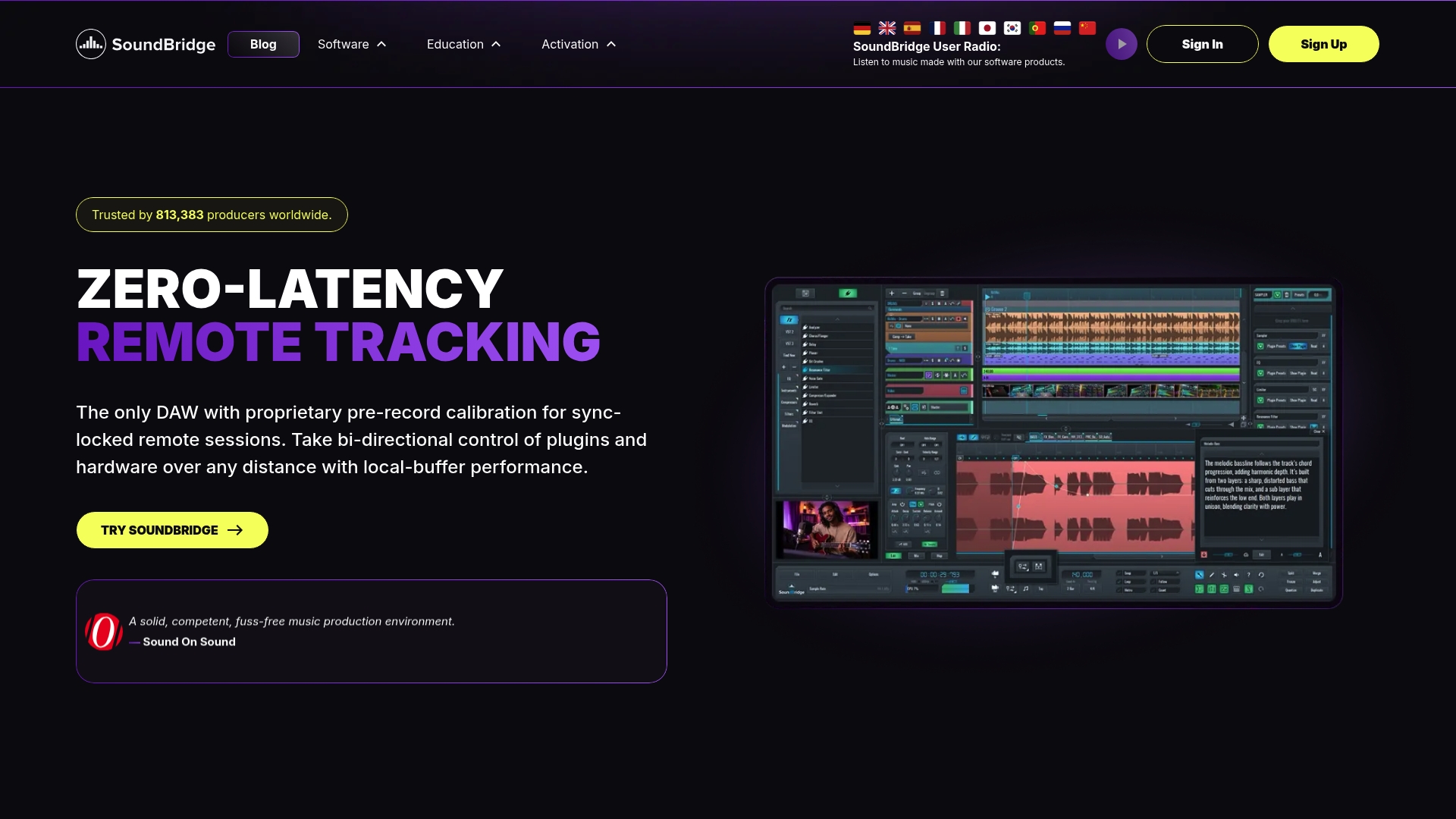
SoundBridge supports real-time collaboration with integrated talkback, bi-directional plugin control, and high-fidelity audio processing up to 192kHz. If you are ready to move beyond basic file sharing and into a proper digital audio workstation built for remote teamwork, SoundBridge runs on both Mac and Windows with free and paid tiers. You can start a session today without a complicated setup or a long learning curve.
FAQ
What is collaborative beat making?
Collaborative beatmaking is the process in which two or more producers build a beat together using shared tools, synchronized sessions, or asynchronous stem exchanges. The industry term is remote co-production.
How do producers collaborate on beats remotely?
Producers use browser-based DAWs for real-time sessions or for asynchronous stem exchanges, enabling flexible, time-zone-independent workflows. Role assignments and track-level locking keep sessions organized.
What latency is acceptable for live beat collaboration?
Round-trip latency at or below 80ms is the practical threshold for real-time musical interaction. Control signal synchronization, in which MIDI commands travel rather than raw audio, achieves latency as low as 50ms.
How do producers split credits in collaborative sessions?
Auto-credit split tools assign earnings proportional to each producer’s session contribution. Platforms are integrating session metadata and payout systems to handle this automatically inside the DAW.
Can AI tools support real-time beat collaboration?
Current AI music tools lack multi-user support, so collaborators rely on asynchronous file sharing and manual stem stitching. Real-time AI coordination between instruments remains limited by computational cost.
Recommended
MASTER MUSIC PRODUCTION
Expert-led courses designed to take you from fundamentals to finished tracks.

HOUSEFrom bouncy bass and solid kicks, this course teaches you the most modern House music production techniques needed to succeed and stand out.
TRAPQuit sounding like generic Trap and produce something World with hints of the Far East. Create ethnic soundscapes to put your Trap ahead of the curve.

AMBIENTProduce relaxing, sophisticated psy-influenced ambient. Psychedelic and relaxing to listen to, create meditative soundscapes to put your listeners in Zen.