

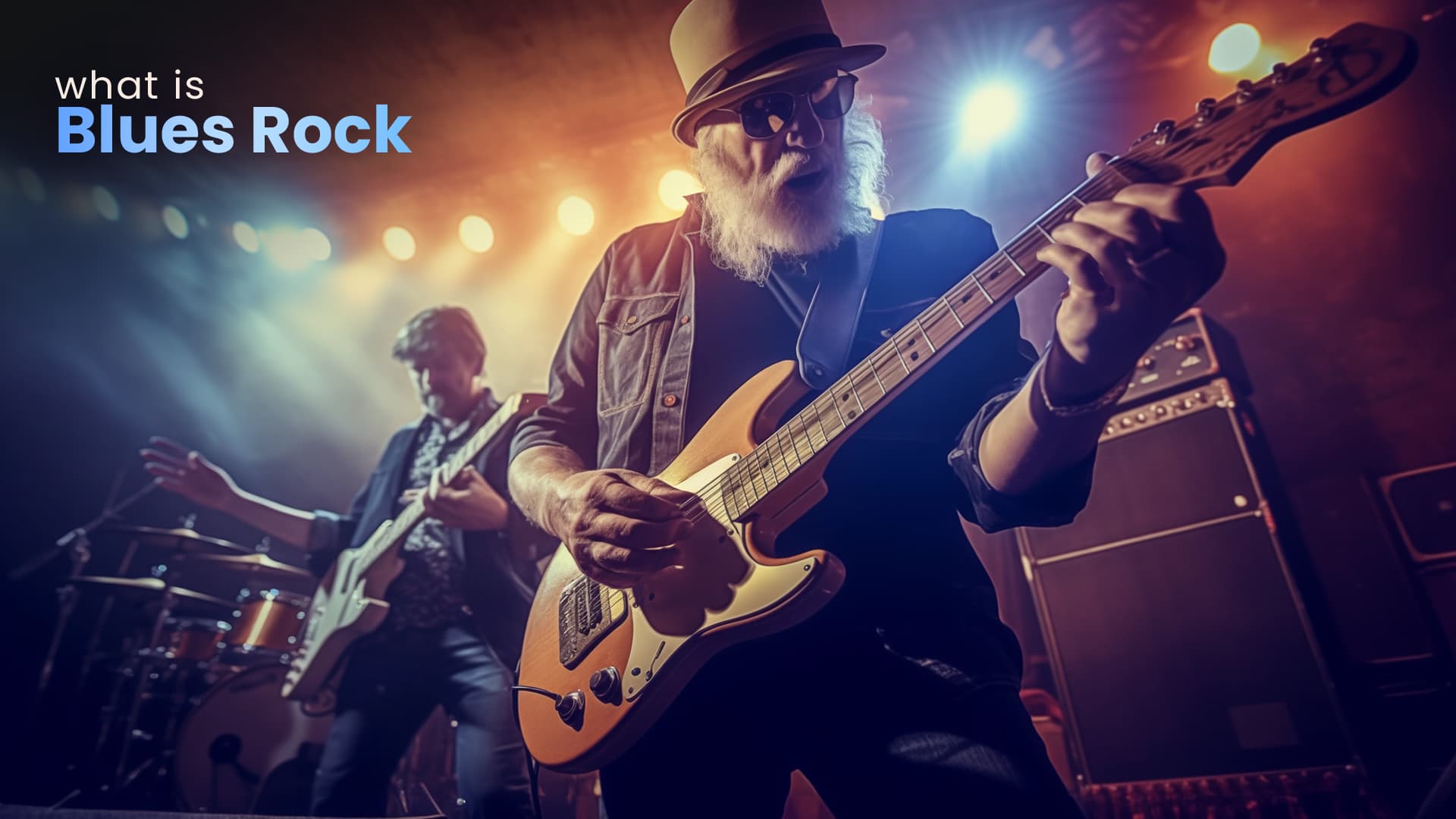
Blues Rock
Last Edited: Dec 29, 2023
Blues rock is a subgenre of music that combines elements of blues, focusing on using blues scales and improvisation. It usually has an electric ensemble style, featuring instrumentation that closely resembles that of electric blues and rock. These instruments include electric guitars, electric bass guitars, drums, and occasionally keyboards and harmonicas. Blues rock emerged in the early to mid-1960s and has undergone various stylistic changes. It has been a source of inspiration and influence for hard rock, Southern rock, and early heavy metal.
Origin of Blues Rock
Blues rock emerged when rock musicians from Britain and the USA first started playing American blues songs. They commonly performed electric versions of Chicago blues tracks. Some include Muddy Waters, Willie Dixon, and Jimmy Reed compositions. They all have a characteristic fast tempo and more forceful rock-inspired sounds. In the United Kingdom, the style gained popularity through the efforts of bands who released successful blues songs. Some of these bands are the Rolling Stones, the Animals, and the Yardbirds, with songs on mainstream pop charts.
The Paul Butterfield Blues Band, Lonnie Mack, and Canned Heat were among the pioneering blues artists in the United States. Several of these bands also performed extensive and complex improvisations, a standard feature in jazz records then. Between 1960 and 1970, the musical style shifted towards a greater emphasis on hard rock. During the 1980s, the increased influence of traditional blues styles influenced the genre immensely. This influence persisted into the 2000s, with a renewed emphasis on fundamental elements. Blues rock songs, in addition to hard rock, became the central focus of the music aired on album-oriented rock radio in the United States. This trend continued with the establishment of the classic rock format during the 1980s.
Characteristics
Blues rock is defined by its bluesy improvisation, lengthy boogie jams that usually revolve around electric guitar solo performances, and frequently a more intense, riff-driven sound and atmosphere than traditional Chicago-style blues. Blues rock bands adopted the concept of an instrumental ensemble and powerful amplificated sound from rock & roll. Furthermore, it is frequently performed at fast tempos, further setting it apart from the blues genre. Blues rock songs often stick to conventional blues structures, such as twelve-bar blues, sixteen-bar blues, and so on.
In addition, they employ the I-IV-V chord progression. However, there are occasional deviations, with specific compositions featuring a distinct "B" part, while others consistently stay on the I chord. The Allman Brothers Band's rendition of "Stormy Monday" incorporates chord substitutions inspired by Bobby "Blue" Bland's 1961 version. Additionally, they introduce a solo section in which the rhythm seamlessly transitions into an energetic jazz feel with a 6/8 time signature. The key is typically primary, although it can also be minor, as exemplified in the song "Black Magic Woman."
If you enjoyed this article, please check out the following:
DOMINA PRODUCCIÓN
Cursos con expertos para llevarte de fundamentos a tracks terminados.
HOUSECon bajos rebotones y kicks sólidos, este curso enseña técnicas modernas de producción House para destacar y triunfar.
TRAPDeja de sonar a Trap genérico y produce algo World con toques de Oriente. Crea paisajes étnicos para poner tu Trap por delante.

AMBIENTProduce ambient relajante y sofisticado con influencia psy. Psicodélico y relajante de escuchar; crea paisajes meditativos para llevar a tu público a Zen.