


How to Make a Bassline That Stands Out
Last Edited: May 8, 2026
In this guide, we will break down how to make a bassline that stands out in the mix without overpowering it. We will build the sound in Vital while focusing on clarity, harmonic control, and dynamic articulation. Then we will move beyond sound design into composition, specifically the question-and-answer technique, in which one bass phrase responds to another within the pattern. In many electronic productions, the bassline is treated as a supporting element. It fills space under the kick, follows the root note, and stays safely in the background. Technically correct, but rarely memorable.
A bassline that stands out in the mix does more than stand out; it defines movement. It creates tension between rhythm and harmony. It carries the groove forward even when drums drop out. In genres like Afro House, Tribal, Organic, and Progressive, the bass is not just low-end weight; it also creates character.
The difference between a functional bassline and a distinctive one is intention rather than complexity. A strong bassline has a clear tone design, deliberate rhythm, and internal dialogue. It feels shaped, not looped. The objective is not just to create a heavy bass; we rather want to create a bassline that speaks.
Listening to the Drum Groove in Soundbridge
Before designing the bass, we establish context using this short drum groove in SoundBridge: DAW. Our groove basically includes the core rhythmic elements: kick, basic percussion, and a subtle top loop. No bass, no melodic elements. The purpose is to create a clean rhythmic foundation.
At this point, we are not analyzing frequencies. We are listening for movement.
Focus on:
- The space between the kick hits
- The swing or straightness of the groove
- The transient sharpness of the drums
- The density of the percussion
Where does the groove feel open, and where does it feel busy?
These gaps are where the bass will eventually live.
Loop the drum section and listen without thinking about notes. Instead, feel the rhythm as a pattern of tension and release. The kick establishes gravity while the percussion defines forward motion. The bassline must lock into this engine rather than fight it.
It is important to avoid writing the bass in isolation. If you design the bass on its own and then try to fit it into the drums later, it will either overpower the groove or feel disconnected from it.
Having a focused drum loop inside SoundBridge to begin with creates a rhythmic map. The bassline will not just follow the tempo; it will also respond to the groove's internal structure.
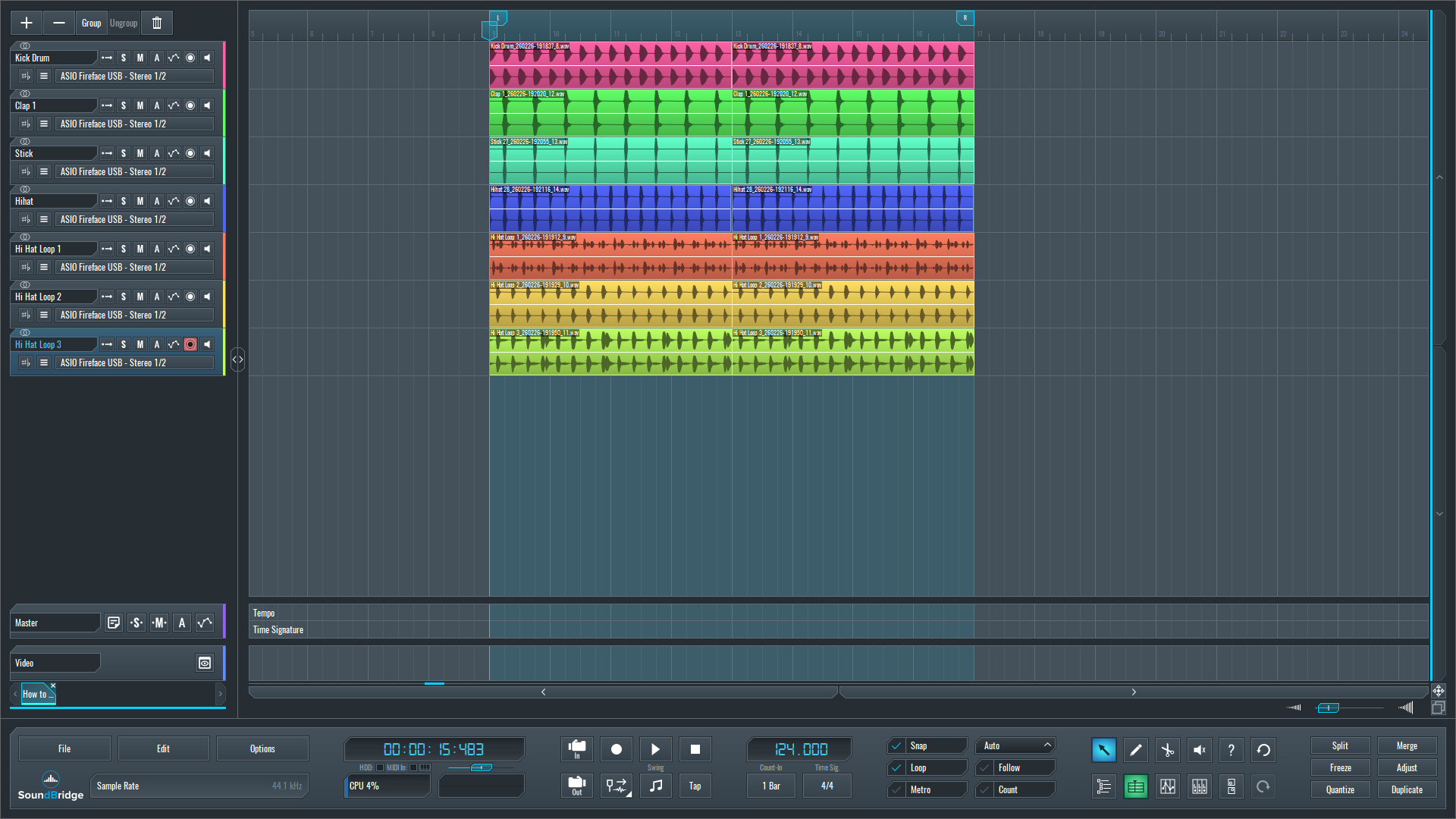
~Drums Section - Solo.
Designing the Main Bassline That Stands Out
With the drum groove looping in SoundBridge, we move to sound design. The objective is to create a bass tone that feels controlled, tight, and rhythmically responsive from the start.
Open Vital and initialize the patch.
Oscillator Configuration
Increase the Unison Voices to 6. This setting immediately adds width and subtle movement to the tone. Then reduce the Detune to around 10%. The goal is not a wide supersaw-style spread, but a controlled thickness. Too much detune will blur the low end and reduce punch. Around 10% keeps the sound cohesive while adding density.
At this stage, avoid adding additional oscillators. Keep the foundation focused and clean.
Amplitude Envelope – The Core of the Groove
For this type of bass, the amplitude envelope defines the character more than the waveform itself. The articulation must be precise.
Set Envelope 1 (Amp) as follows:
- Attack: approximately 14 ms
- Decay: around 6 ms
- Sustain: very short, around 3 ms
- Release: slightly longer, around 1.7 ms
The slight attack prevents harsh clicking and gives the bass a smooth entry. The short decay and sustain create a pluck-like body without letting the note ring out excessively. The controlled release ensures that the sound ends cleanly before the next rhythmic event. This envelope shape is what makes the bass feel rhythmic rather than sustained.
Filter Routing and Movement to Make the Bassline Stand Out
Now route the tone through Filter 1.
Select an Analog-style 24 dB low-pass filter. This slope provides a tight and controlled cutoff curve, helping us shape the harmonic content with precision.
Reduce the Resonance completely. We are not looking for a resonant peak; we are only looking for controlled filtering.
Pull the Cutoff fully left to make the sound heavily filtered.
Then map Envelope 1 to the Filter 1 Cutoff. This mapping makes the same envelope controlling the amplitude also open the filter briefly with each note.
The result is a dynamic pluck effect:
- The note triggers
- The filter opens momentarily
- The harmonics appear
- The sound closes again
This sequence creates movement inside every hit, even before writing a complex pattern.
At this stage, the routing is complete. No additional modulation is required. The sound should already feel tight, percussive, and rhythmically aligned with the drum groove.
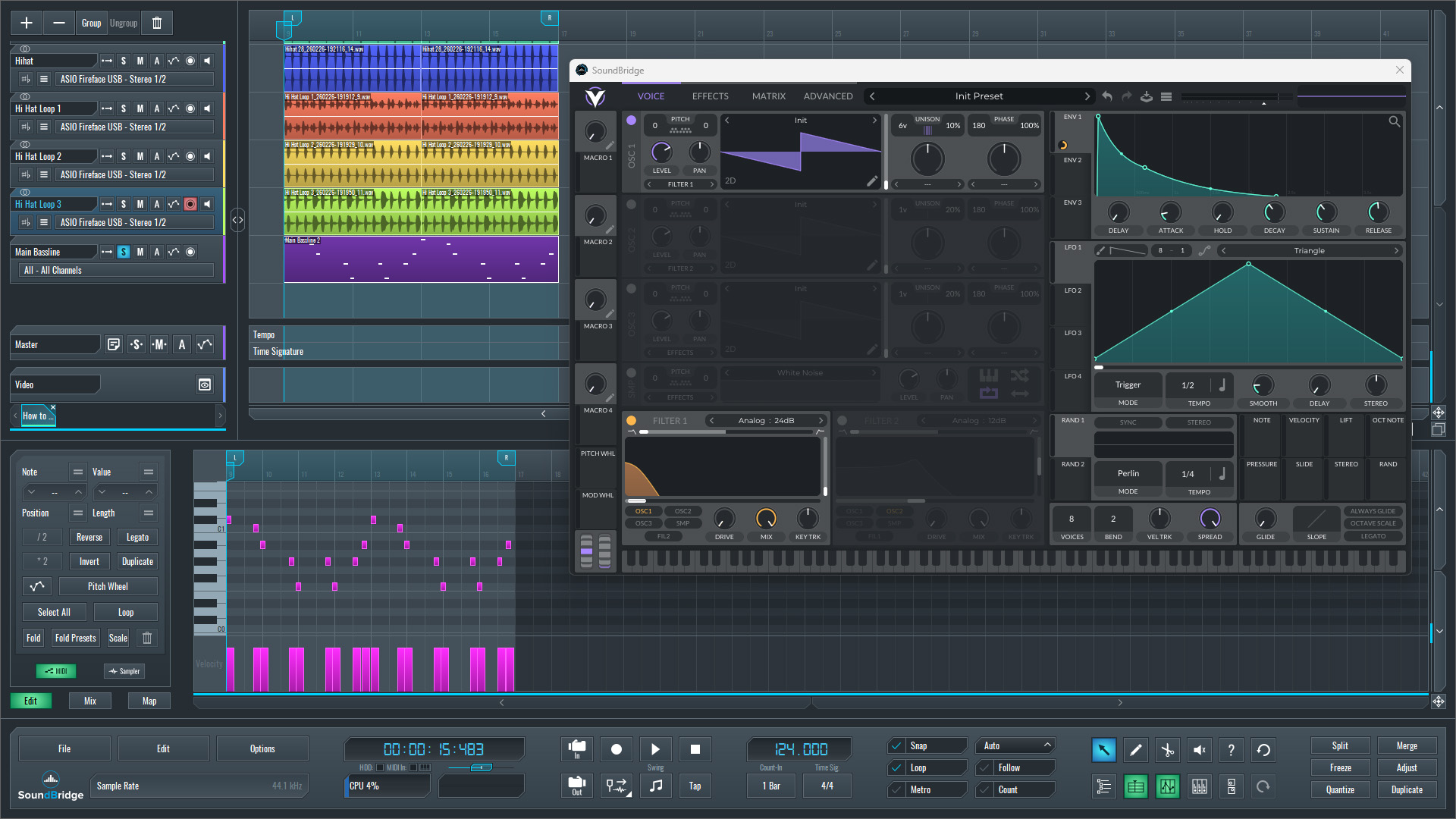
~Bassline Vital - OSC & Envelope - Solo.
To make the bassline stand out more, sound more solid, and mix-ready, we can enhance it with two internal effects in Vital.
First, enable Distortion and select Soft Clip mode. These effects add subtle harmonic density and round the peaks without making the sound harsh. The result is a fuller, more present midrange while maintaining controlled low-end.
Then activate the Compressor in Multiband mode. This step tightens the sub frequencies and stabilizes the overall dynamics, increasing perceived punch without adding unnecessary loudness.
With soft clipping and multiband compression engaged, the bass becomes denser, more controlled, and better balanced inside the groove.
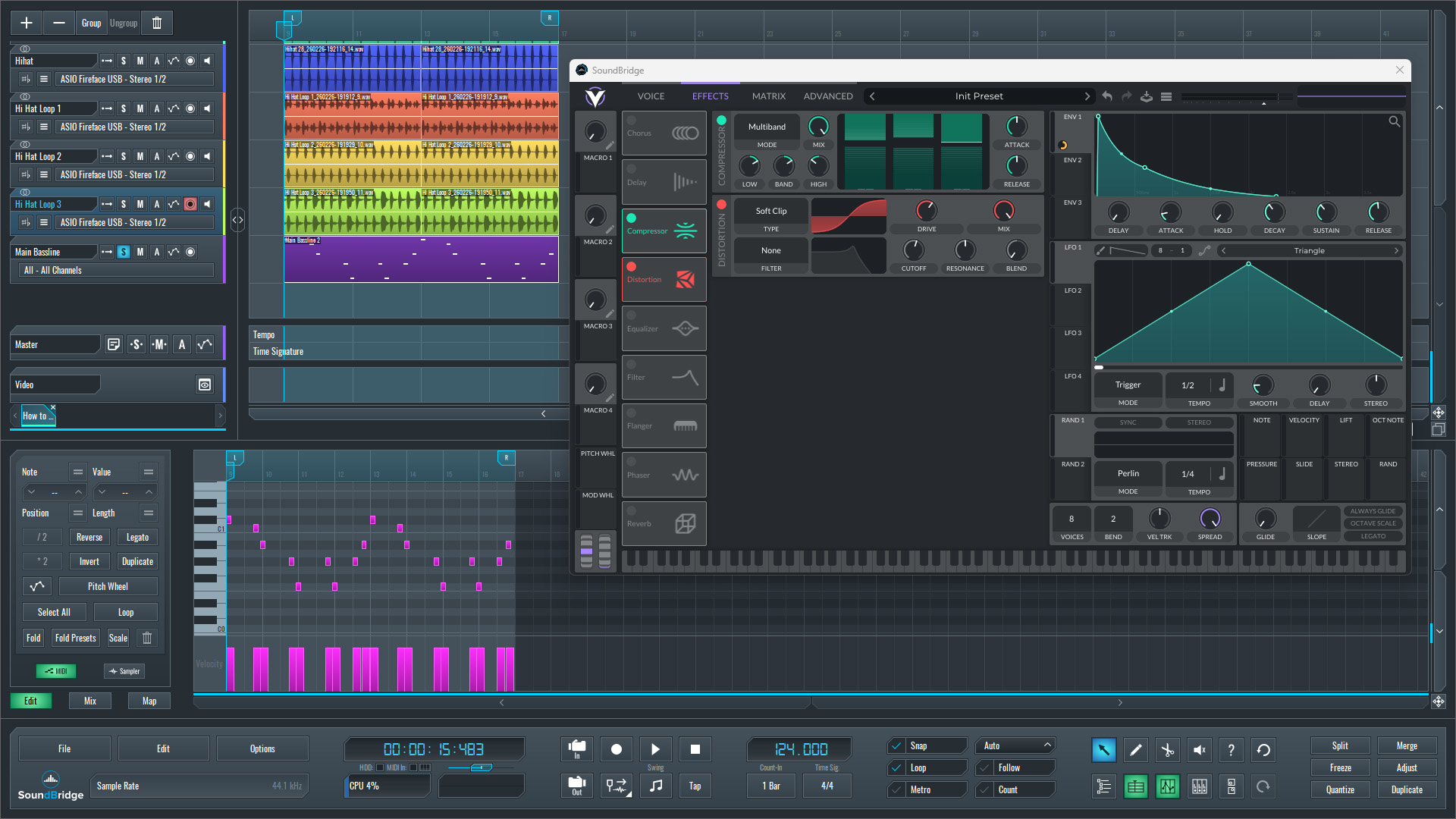
~Bassline Vital - Effects - Solo
Checking if the Bassline Stands Out in Context and Adding Subtle Sidechain
With the bass sound designed, we return to the drum groove in SoundBridge and listen to both elements together. The goal is not to judge the bass in isolation, but to evaluate how it interacts with the kick and percussion.
At this stage, focus on clarity and separation. The bass should feel locked to the groove without masking the kick's transient or low-end weight.
To prevent frequency collision, apply a subtle sidechain on the bass channel, triggered by the kick. Keep the reduction minimal, just enough to create space at the moment of impact. The effect should not be obvious or pumping. It should simply allow the kick to breathe while maintaining the bassline's presence.
Once the sidechain is dialed in, the groove should feel tighter, cleaner, and more defined.
~Full Mix - With Main Bassline.
Using the Question and Answer Technique with Sub Bass
When listening to the designed bassline together with the drum groove, certain gaps stand out. These are the moments where the main bass is silent or pulling back. Instead of leaving those spaces empty, we can use them intentionally, and that's where the question-and-answer technique comes in.
The main bass phrase acts as the "question." In the spaces where it stops, we introduce a sub bass response, a simpler, deeper tone that supports the groove without competing for attention. The sub does not duplicate the rhythm. It answers it.
The contrast is essential:
- Main bass: more harmonic content, filter movement, character
- Sub bass: cleaner, deeper, more stable
The sub should be rhythmically positioned in the gaps of the main bass pattern. This arrangement creates internal dialogue inside the low end, giving the groove forward motion without overcrowding it.

We first listen to the sub bass in solo, focusing on tone, sustain, and how it carries the space left by the main bass.
~Sub Bassline - Solo.
Next, we listen to the sub bass together with the main bass, paying attention to timing and interaction. The two parts should feel like a call-and-response, not overlapping statements.
~Main Bass - Sub Bass.
Finally, we play the full mix with drums included. At this stage, the low end should feel more animated and complete. A single repeating line no longer drives the groove, but rather a conversation between two complementary elements.
~Full Mix – Bass Question & Answer Pattern.
Final Thoughts
At this stage, the bassline is no longer a static loop; It stands bold, has structure, movement, and internal dialogue. The combination of a shaped main bass and a responding sub creates tension and release inside the low end, making the groove feel intentional rather than repetitive.
To better imagine how this idea would function in a complete track, we can introduce one additional synth in the full mix. This layer can follow the same notes as the main bass, reinforcing the harmonic identity while adding width or midrange texture. It does not need to be complex; its role is supportive, helping translate the pattern beyond the low frequencies.
When everything plays together (drums, bass, and supporting synth), the result feels closer to a finished production. The groove becomes cohesive, dynamic, and strong enough to carry an entire arrangement forward.
~Full Mix - With Complete Bassline and supporting Synth Sequence.
If you like this article, here are some more on the same subject:
MASTER MUSIC PRODUCTION
Expert-led courses designed to take you from fundamentals to finished tracks.

HOUSEFrom bouncy bass and solid kicks, this course teaches you the most modern House music production techniques needed to succeed and stand out.

TRAPQuit sounding like generic Trap and produce something World with hints of the Far East. Create ethnic soundscapes to put your Trap ahead of the curve.

AMBIENTProduce relaxing, sophisticated psy-influenced ambient. Psychedelic and relaxing to listen to, create meditative soundscapes to put your listeners in Zen.