

Glam Rock
Last Edited: Jan 25, 2024
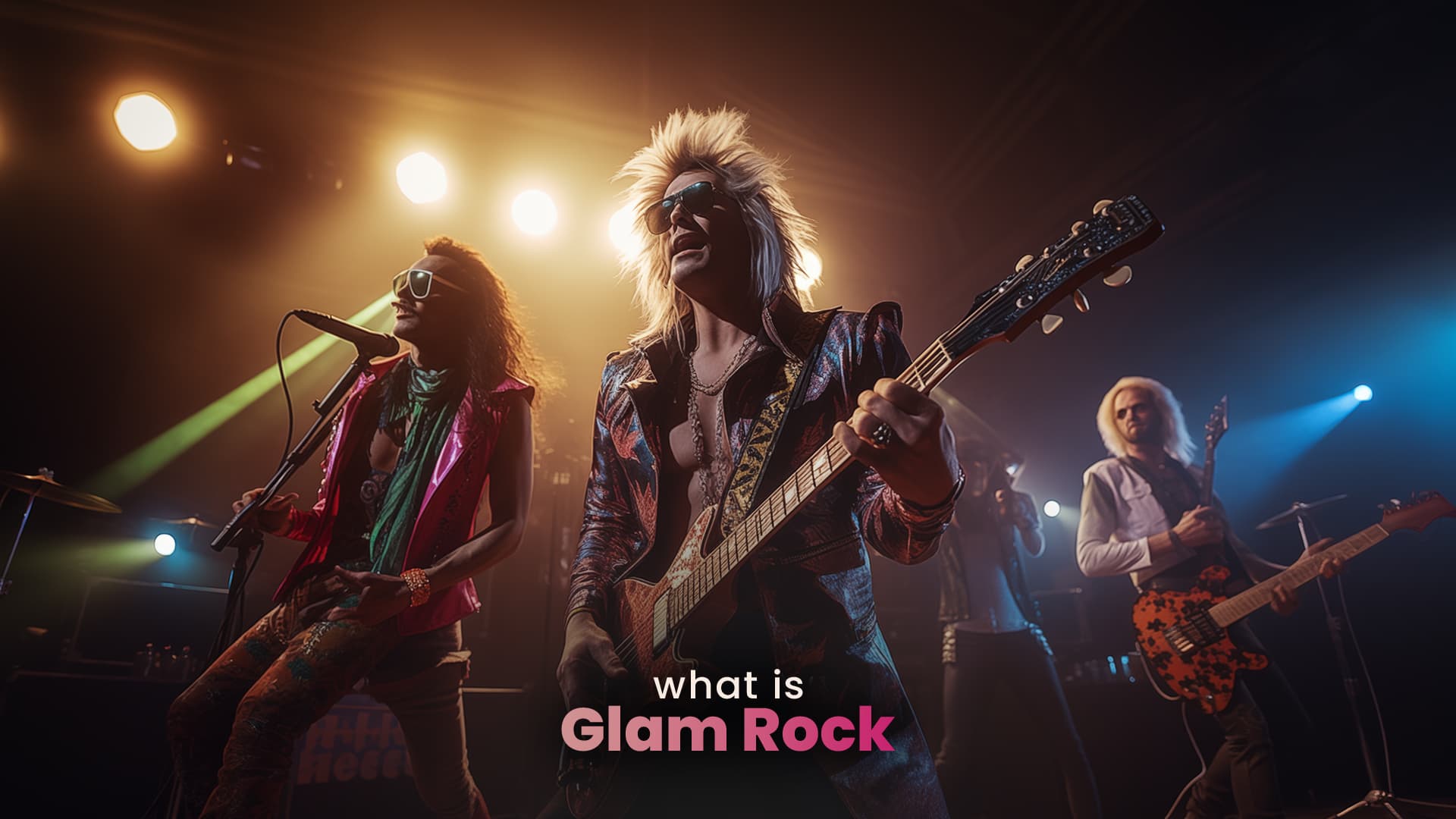
Glam rock is a subgenre of rock music originating in the UK in the early 1970s. Male artists of this style dressed in extravagant and feminine attire, including cosmetics, wigs, platform shoes, and glitter. Additionally, female performers in this genre opted for more macho apparel. Glam musicians incorporated influences from other music genres and disposable popular culture. These cultures include bubblegum pop, 1950s rock & roll, lounge, science fiction, and intricate art rock. The performers' colorful attire and visual aesthetics frequently exhibited camp or androgynous characteristics contradicting traditional gender norms.
Origin of This Genre
Glam rock originated from the British psychedelic and art rock movements of the late 1960s. It is a continuation of and a response to those developments. The movement started with Marc Bolan. He changed the name of his acoustic duet to T. Rex and began using electric instruments in the late 1960s. Visually, it exhibited a fusion of diverse styles, encompassing 1930s Hollywood charm, 1950s pin-up sensuality, and pre-war cabaret theatrics. It also featured Victorian literary and symbolist aesthetics, science fiction, ancient and occult mysticism, and mythology. This was evident in the flashy attire, makeup, hairstyles, and platform-soled boots.
In late 1971, David Bowie, a somewhat famous artist, created his Ziggy Stardust character by integrating aspects of professional cosmetics, mime, and theatricality into his performances. In a 1972 interview, Bowie acknowledged that while other musicians labeled as glam rock were pursuing distinct artistic endeavors, he expressed his appreciation for being categorized as such and took pride in being considered one of its pioneers.
Bolan and Bowie were subsequently emulated in their manner by other artists such as Roxy Music, Sweet, Slade, Mott the Hoople, Mud, and Alvin Stardust. Slade and Mott the Hoople were bands that represented a more weighty version of glam rock. They focused on songs centered around guitar riffs, energetic rhythms, and engaging live performances that involved the audience. Later, bands like Def Leppard, Cheap Trick, Poison, Kiss, and Quiet Riot followed in their footsteps. Some of these bands either performed cover versions of Slade's songs (such as "Mama Weer All Crazee Now and Cum On Feel the Noize") or created new songs inspired by Slade's style.
Glam Rock in Recent Years
Although glam rock originated as a uniquely British cultural movement, Steven Wells of The Guardian said Americans were first exposed to glam rock through David Bowie's more sophisticated interpretation. However, American athletic events now feature instrumental versions of popular British glam rock songs. Glam rock has exerted a significant influence on a global scale.
During the 1980s in Japan, glam rock aesthetics heavily influenced the visual kei movement. Glam rock has had a lasting impact and occasional small resurgences in the realm of R&B through performers like Prince, as well as in the works of bands like Marilyn Manson, Suede, Placebo, Chainsaw Kittens, Spacehog, and the Darkness. Furthermore, it has served as a source of inspiration for pop musicians such as Lady Gaga.
If you enjoyed this article, please check out the following:
음악 프로덕션 마스터
기초부터 완성 트랙까지 이끄는 전문가 코스.

HOUSE바운시 베이스와 탄탄한 킥부터, 이 코스는 성공하고 돋보이기 위한 가장 현대적인 House 프로덕션 테크닉을 가르칩니다.

TRAP뻔한 Trap처럼 들리지 마세요—극동의 힌트를 담은 월드한 사운드를 만드세요. 에스닉 사운드스케이프로 Trap을 한발 앞서게 합니다.

AMBIENT편안하고 세련된 psy-영향 앰비언트를 제작하세요. 듣기에도 몽환적이고 편안한, 리스너를 Zen에 두는 명상적 사운드스케이프를 만드세요.