


Lo-Fi Processing for Pianos and Chords
Last Edited: Apr 8, 2026
In this article, we'll walk through a practical workflow for processing a simple piano chord progression into a warm, lo-fi texture. Rather than focusing on extreme effects, we'll explore subtle techniques such as bandwidth shaping, transient softening, pitch instability, noise layering, and gentle saturation. The process is designed to enhance musicality while preserving the emotional core of the performance.
In many modern productions, especially across lo-fi, downtempo, chill, and ambient-influenced genres, piano chords often play a central emotional role. They provide harmony, space, and a sense of intimacy. However, when left completely clean and unprocessed, they can feel sterile, static, or overly digital.
Lo-fi piano is not about poor sound quality or heavy degradation. Instead, it's about controlled imperfection: subtle instability, softened transients, limited bandwidth, and gentle layers of texture that make the sound feel lived-in rather than pristine.
A common misconception is that achieving a lo-fi aesthetic requires complex plugins or all-in-one "retro" processors. In reality, a convincing lo-fi piano sound can be created with just a few carefully chosen tools, applied with intention. What matters far more than the number of plugins is how each stage affects tone, dynamics, and movement over time.
The goal is not to destroy clarity, but to remove perfection. By the end of this guide, you'll understand how small imperfections, applied deliberately, can transform a clean piano sequence into something that feels organic, nostalgic, and expressive; perfectly suited for lo-fi aesthetics.
Listening to the Pattern Before Lo-Fi Processing
Before applying any processing, we first listen to the full pattern created in SoundBridge DAW. The goal at this stage is not to analyze details but to understand how the piano chords behave within the groove and the loop's overall texture.
With the full pattern playing, pay attention to how the piano sits against the rhythm and atmosphere. Does it feel too clean? Too forward? Too sharp for a lo-fi context? These first impressions are important and will guide later processing choices.
Next, we solo the piano track and listen to it completely unprocessed. This setting allows us to hear the raw sound without any influence from the rest of the arrangement. In isolation, clean piano chords often reveal characteristics that don't immediately stand out in the full mix, such as overly defined transients, a wide frequency range, or a lack of natural movement.
At this point, we are not trying to fix anything. We are establishing a reference for how the original piano sounds before any lo-fi processing is applied. This unprocessed version will serve as a baseline, making it easier to judge how each processing step affects tone, dynamics, and character as we move forward.
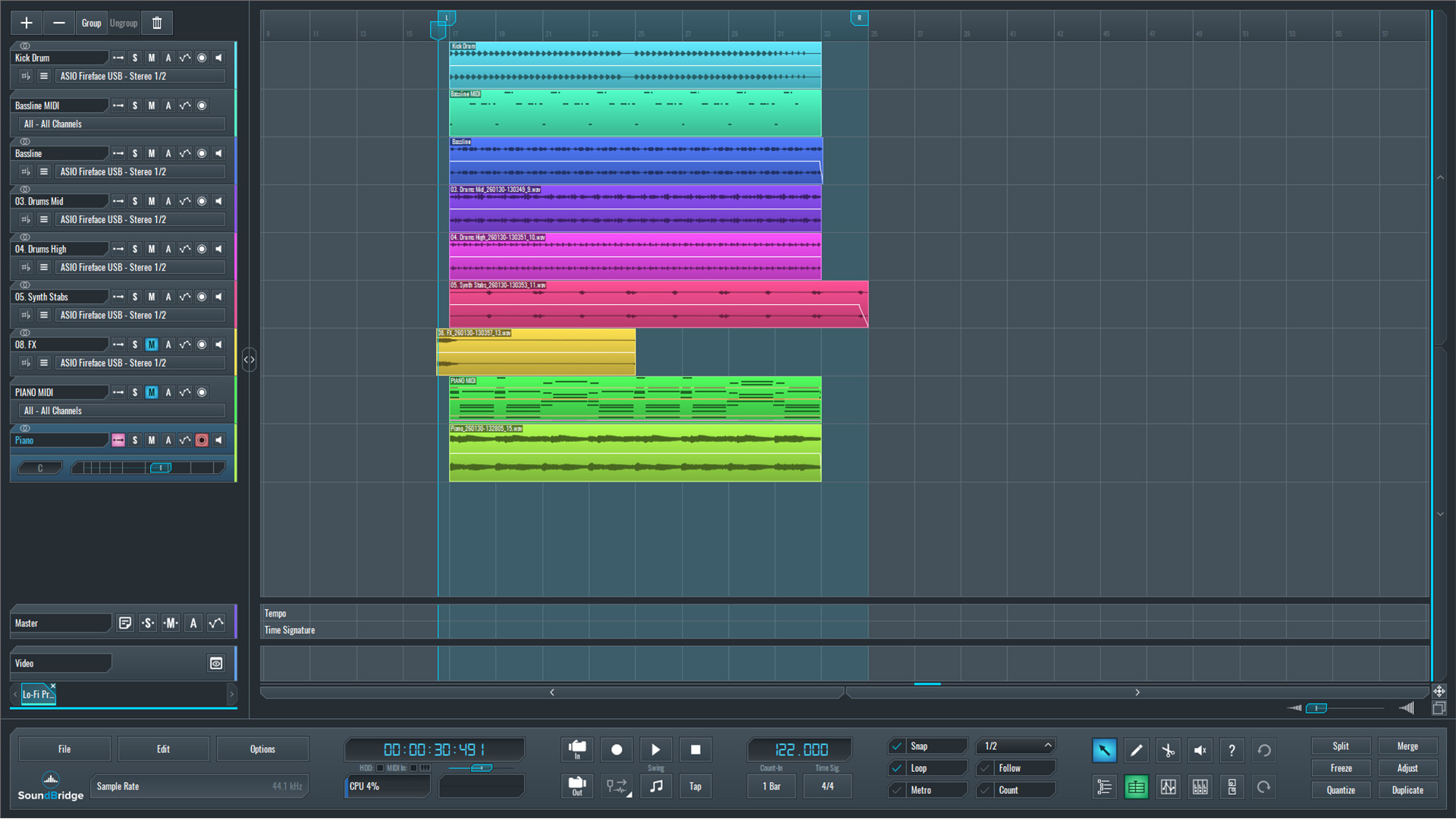
~Full Mix (Piano Unprocessed).
~Piano (Solo, Unprocessed).
Building the Lo-Fi Sound Step by Step
With the unprocessed piano sequence as our reference, we can now start shaping it into a lo-fi sound. We'll do this gradually, using a small chain of three to four plugins, adding one at a time.
After inserting each plugin, we'll stop and listen to how it affects the piano before moving on to the next step. Listening makes it easier to understand each processor's contribution and helps avoid overprocessing.
Our focus throughout this process will be on softening transients, reducing excessive clarity, and introducing subtle character and movement, without losing the musical feel of the chords.
In the following sections, we'll break down each stage of the chain and explain how small, controlled changes can transform a clean piano sequence into a warm, lo-fi texture.
Using Lo-Fi Processing to Add Initial Imperfections
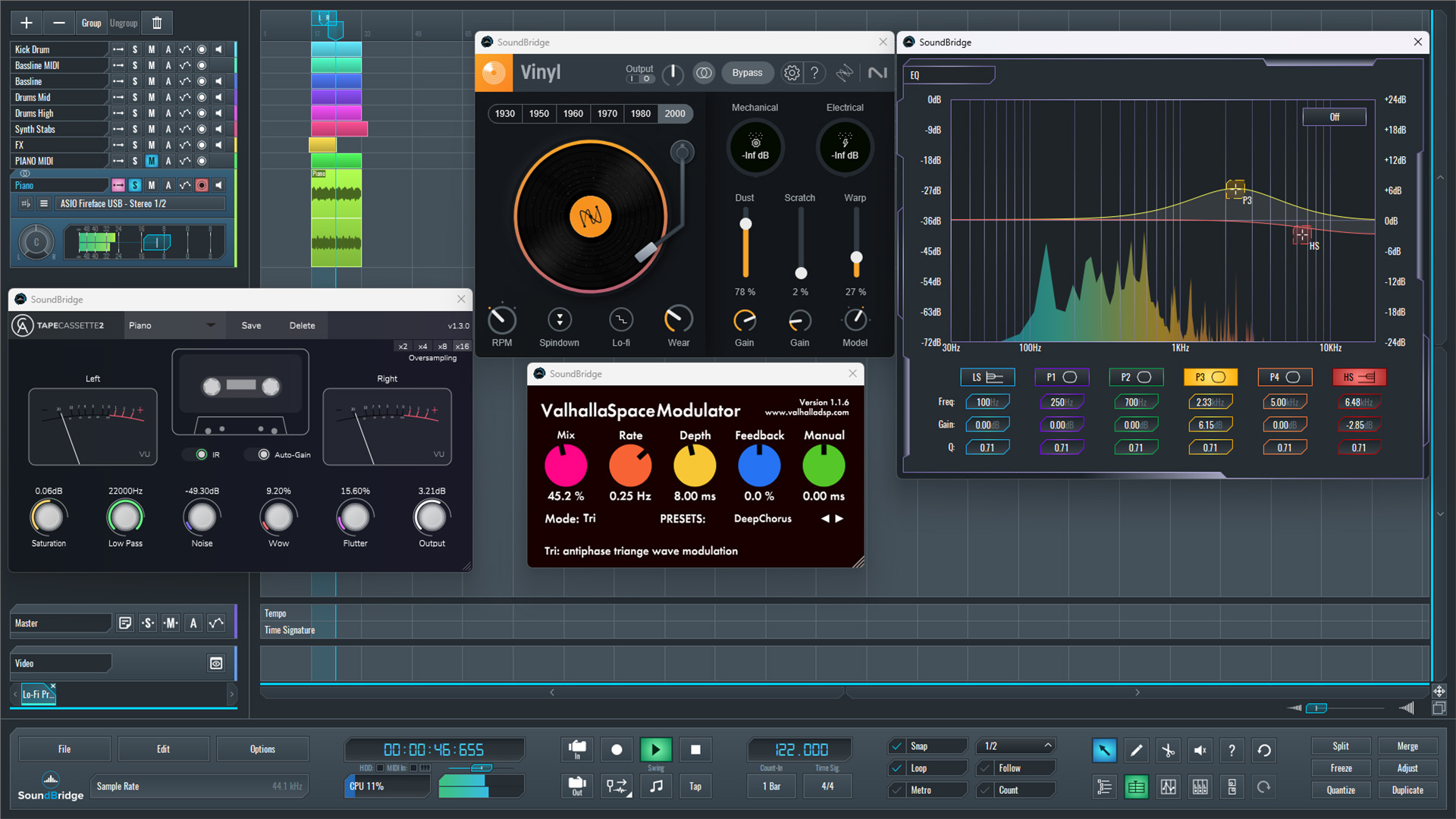
The first plugin in our effect chain is iZotope Vinyl. Here, we introduce the first layer of lo-fi character by adding subtle vinyl crackle and a small wow effect.
These slight pitch fluctuations simulate the behavior of worn records and help break the piano's pitch stability, adding gentle movement to sustained chords. In addition to pitch variation, the added noise creates a sense of space and context, as if the piano is being played back through an imperfect physical medium rather than a clean digital system.
After applying these settings, we listen back to the processed piano to hear how even minor imperfections begin to shape a more organic, lo-fi feel.
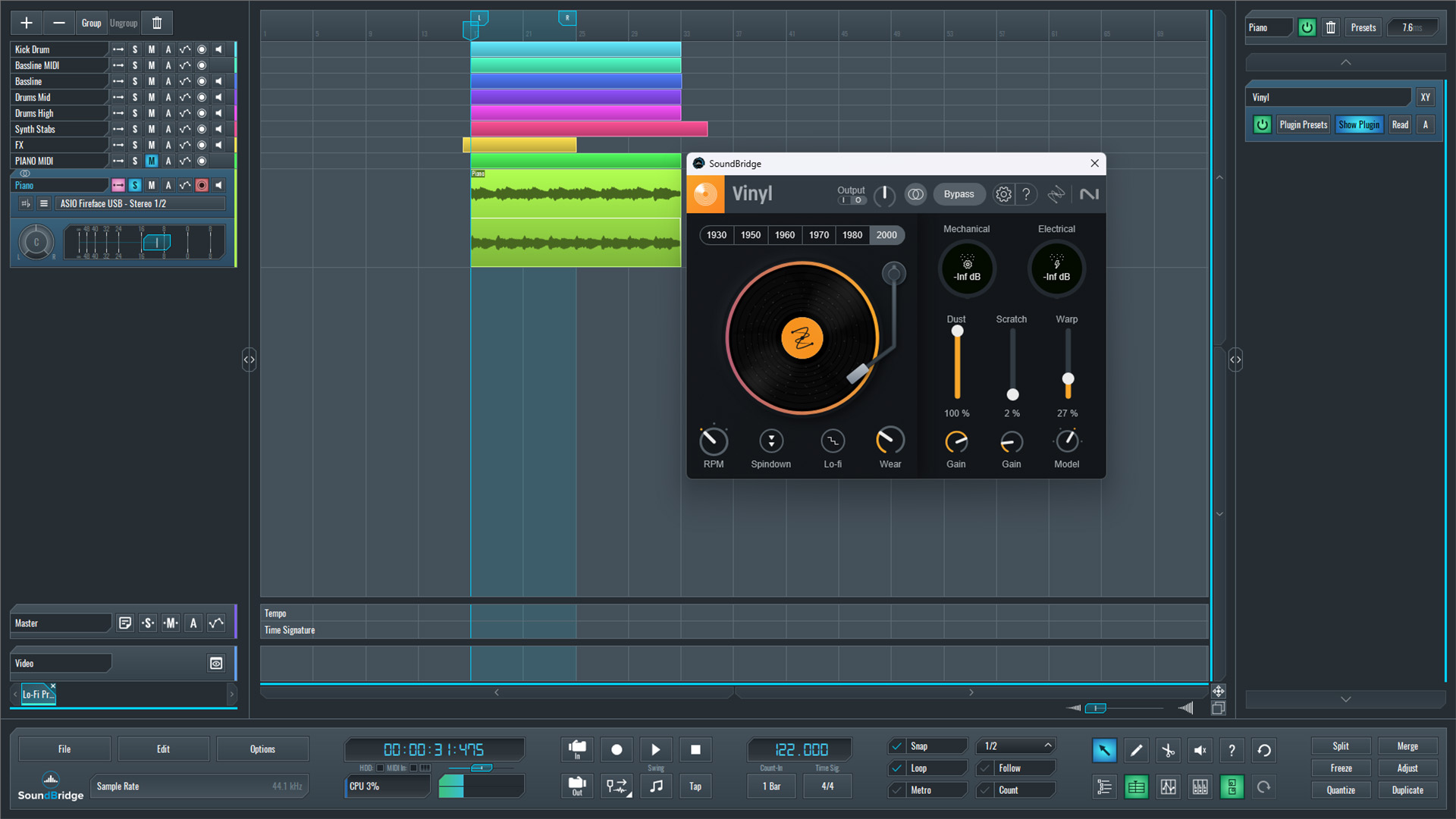
~Piano (Solo, Processed with Izotope Vinyl).
Adding Movement With Valhalla Space Modulator
To introduce an additional layer of imperfection and movement, we add Valhalla DSP Valhalla Space Modulator to the effect chain. For this step, we select a Deep Chorus–style preset as a starting point.
This type of chorus adds gentle pitch modulation and width, making the piano feel less static and more expressive. The result is a slightly detuned, swirling character that recalls the sound of an old piano drifting through space. This sound is similar to the classic saloon pianos heard in vintage cowboy films.
After applying the chorus, we listen back to the piano sequence to hear how this subtle modulation enhances the lo-fi aesthetic, adding depth and a nostalgic sense of movement without overpowering the original chords.
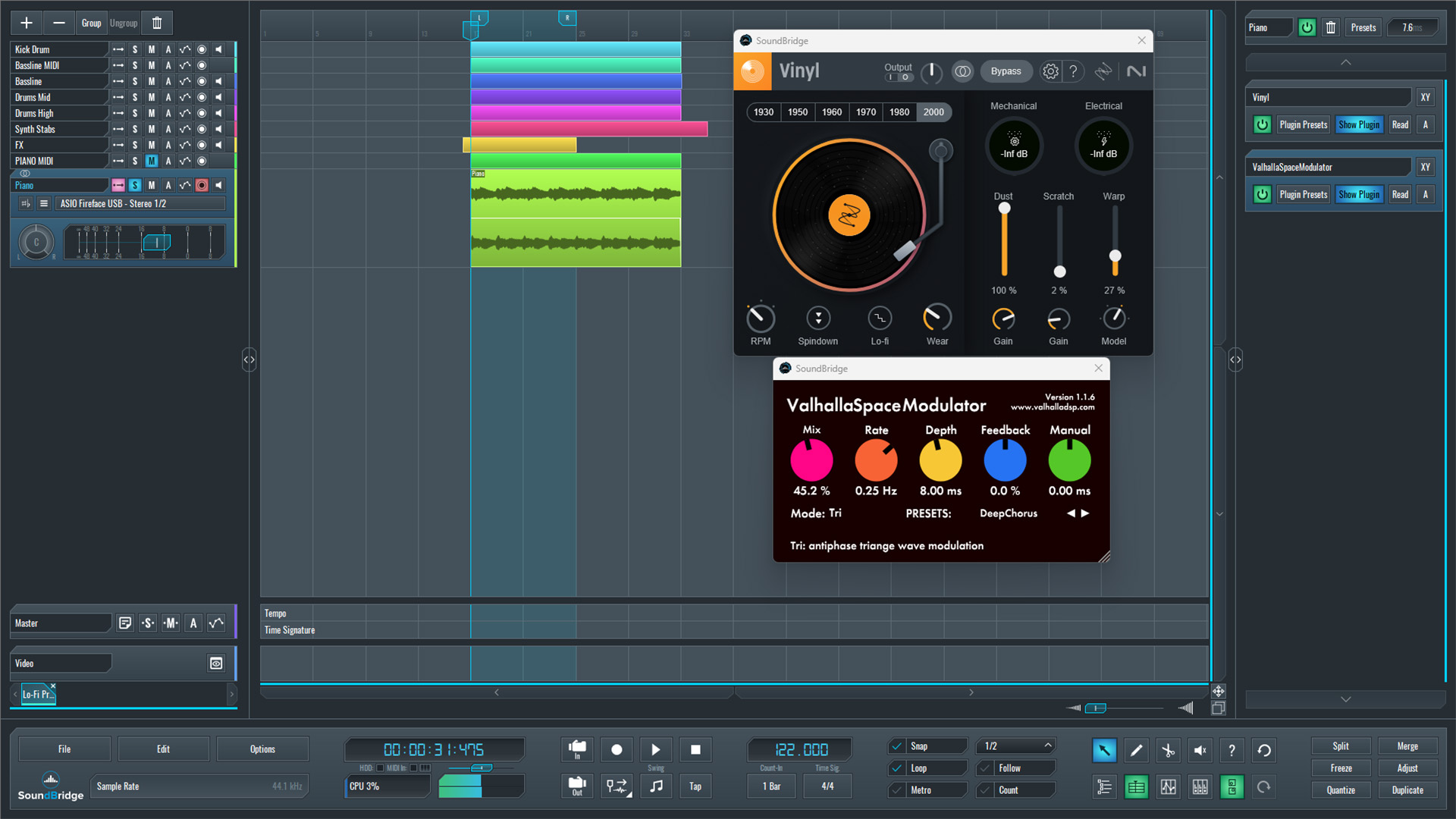
~Piano (Solo, Processed with Izotope Vinyl and VHL Space Mod.).
Adding Tape Color
Next, we further color the sound by adding Caelum Audio Tape Cassette 2 to the effect chain. This plugin helps introduce a more pronounced lo-fi character inspired by cassette tape playback.
Here, we add a small amount of white noise, along with subtle wow and flutter, to enhance pitch instability and texture. These elements work together to soften the piano further and reinforce the feeling of analog imperfection.
After applying these settings, we listen back to the processed piano to hear how the added tape coloration deepens the lo-fi aesthetic without overwhelming the original performance.
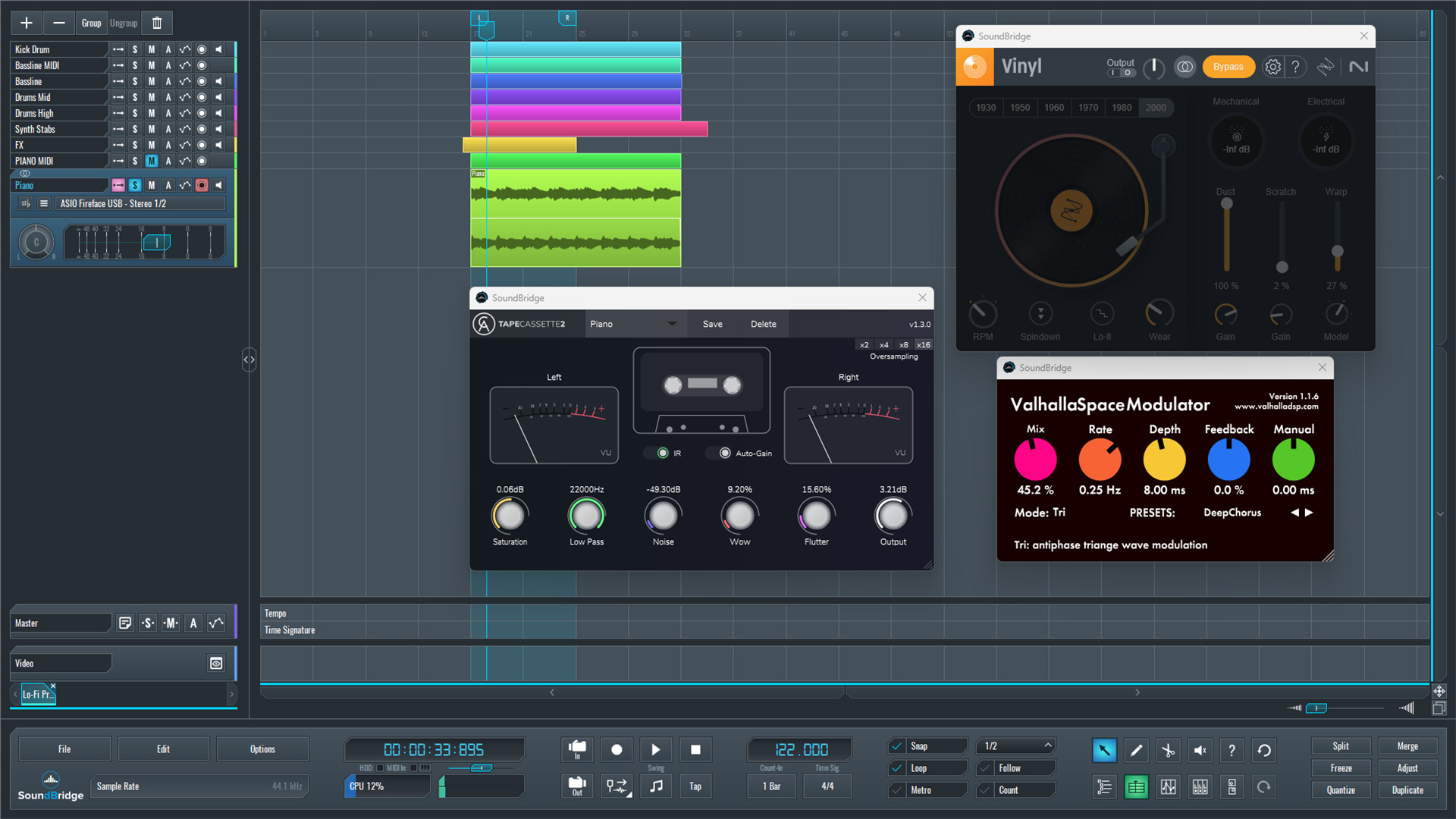
~Piano (Solo, Processed with Izotope Vinyl, VHL Space Mod. & Tape Cassette 2).
Final EQ Shaping and Listening to the Lo-Fi Processing in Context
After passing the piano through multiple stages of modulation, noise, and tape-style processing, the signal is intentionally altered, softened, destabilized, and partially degraded. While this is exactly what gives lo-fi its character, it often leaves the sound slightly dull or unfocused in the mix.
To bring everything into balance, we finish the chain with a final EQ stage.
Here, we gently boost a small amount of high- and mid-range frequencies to restore presence and clarity without removing the lo-fi feel. This tiny boost helps the piano remain audible and expressive, especially once other elements are playing. At the same time, we apply subtle low-shelf and high-shelf attenuation, further narrowing the bandwidth and reinforcing the sense of a limited, vintage playback system.
These EQ moves are intentionally minimal. The goal is not to "fix" the sound, but to shape it. The result of all previous processing should be something cohesive and musical.
Once the EQ is set, we stop listening in solo and return to the full pattern. Hearing the piano back in context with the rest of the arrangement is crucial at this stage. This listening process reveals whether the lo-fi processing enhances the overall mood or competes with other elements. This final context check confirms that the piano now sits comfortably in the mix. We want it to be warm, imperfect, and fully integrated into the lo-fi aesthetic.
~Piano (Solo, Fully Processed).
~Full Mix (Piano Fully Processed).
Final Thoughts
Creating a convincing lo-fi piano sound is not about destroying the source or stacking extreme effects. It's about intentional imperfection, introducing subtle instability, texture, and tonal limitation while preserving the musical emotion of the chords.
Throughout this process, we worked step by step, adding one layer at a time and listening carefully after each stage. Small amounts of vinyl noise, pitch modulation, tape coloration, and gentle EQ shaping combined to create a sound that feels warmer, more organic, and less rigid than a clean digital piano. None of these elements is powerful on its own, but together they form a cohesive lo-fi character.
One of the most important takeaways is the importance of context. A lo-fi piano that sounds interesting in solo may feel too dull or too noisy once placed back into the full arrangement. Always finish by listening in context and adjusting levels subtly rather than reaching for more processing.
Lo-fi is not a shortcut or a preset; it's a mindset. By focusing on restraint, movement, and texture instead of heavy-handed degradation, you can create piano sounds that feel nostalgic, intimate, and musically expressive rather than broken.
Ultimately, the goal is not to make the piano sound old or damaged, but to make it feel human.
If you liked this article on sound design, here are some more on the same subject:
MASTER MUSIC PRODUCTION
Expert-led courses designed to take you from fundamentals to finished tracks.

HOUSEFrom bouncy bass and solid kicks, this course teaches you the most modern House music production techniques needed to succeed and stand out.

TRAPQuit sounding like generic Trap and produce something World with hints of the Far East. Create ethnic soundscapes to put your Trap ahead of the curve.

AMBIENTProduce relaxing, sophisticated psy-influenced ambient. Psychedelic and relaxing to listen to, create meditative soundscapes to put your listeners in Zen.