

Make Your Kick and Bass Sound Tight
Last Edited: Jan 18, 2024
Mixing the kick and bass is an often discussed topic among audio engineers. The lower end of the spectrum is a critical area where mistakes can easily be made, and subjective preferences cannot be used as an excuse. Bearing this in mind, we will show you how to make your kick and bass sound tight in this tutorial.
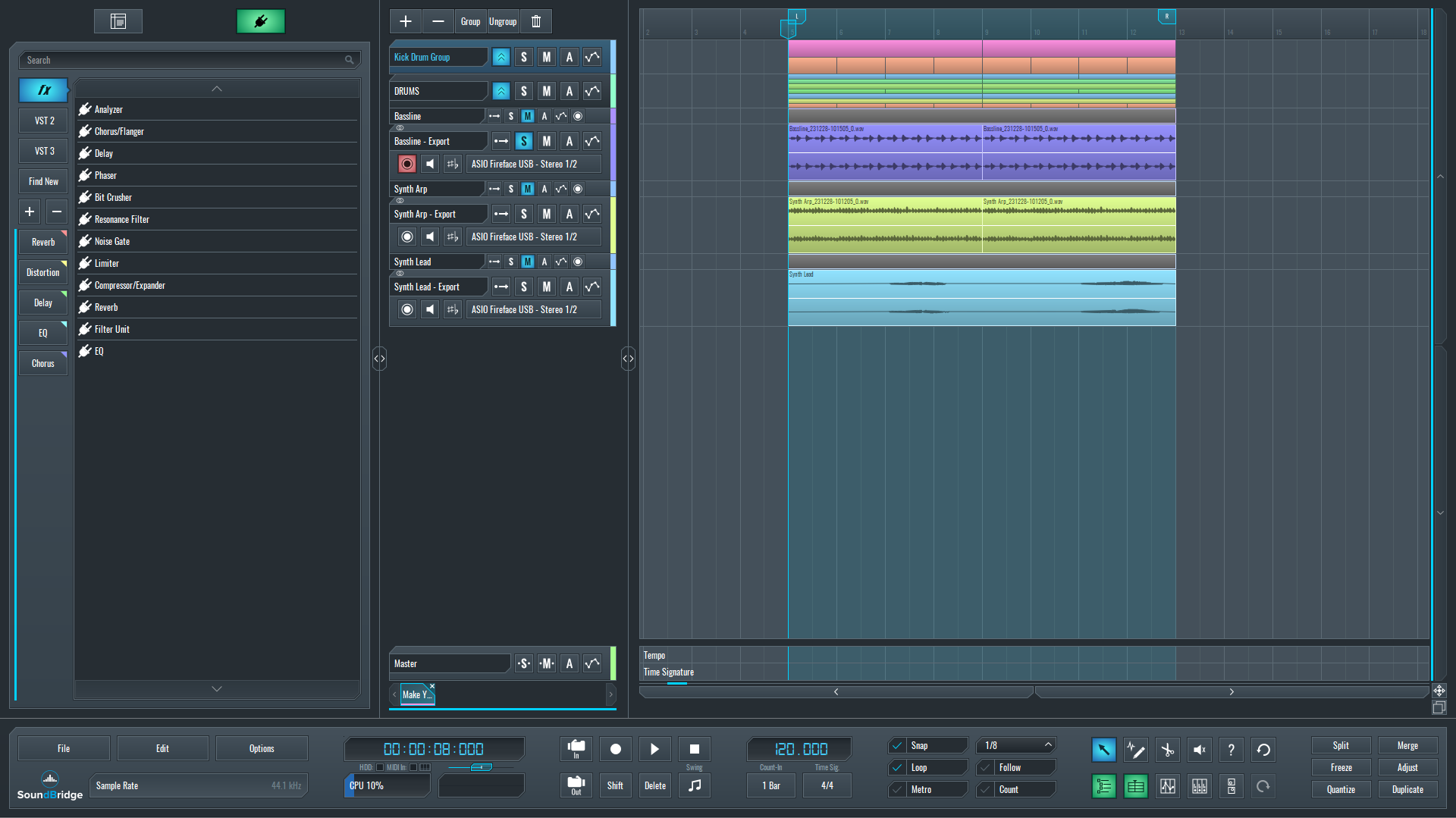
As usual, we'll begin by listening to the short sequence created in our SoundBridge: DAW, which contains most of the full mix's elements, including the kick drum and bassline.
~Full Mix - Kick (Unprocessed)
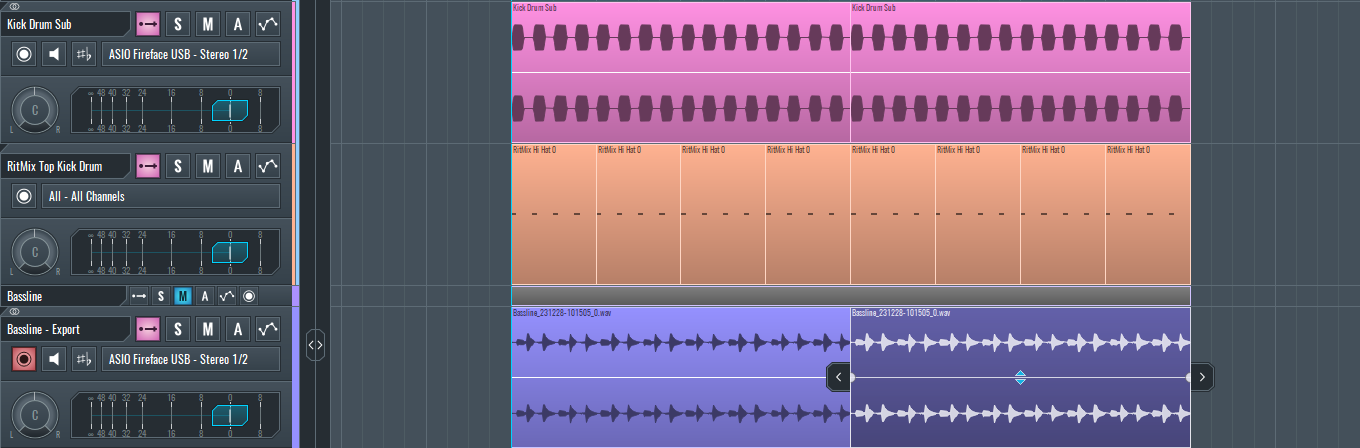
As you may have noticed, the kick drum and bassline do not sound particularly good in the mix. The main issue is that the kick drum is overpowering. Listen to the kick and bass first, then just the kick drum solo to get a better picture.
~Kick Drum & Bassline - Solo (Unprocessed)
~Kick Drum - Solo (Unprocessed)
Use a Volume Envelope to Make Your Kick and Bass Sound Tight
Listening to the kick drum solo, we can hear its tail is extremely long. It chokes the rest of the elements of the mix and affects the rhythm section's dynamics. In this case, two elements make up the kick drum. We have the kick drum sub as well as the top kick drum, which gives the overall sound punch. It is easier to deal with this issue by creating a group channel and naming it "Kick Drum Group," for example.
To begin with, we will add LFO Tool by Xfer or any other effect capable of controlling the volume envelope of the sound on the newly created group channel.
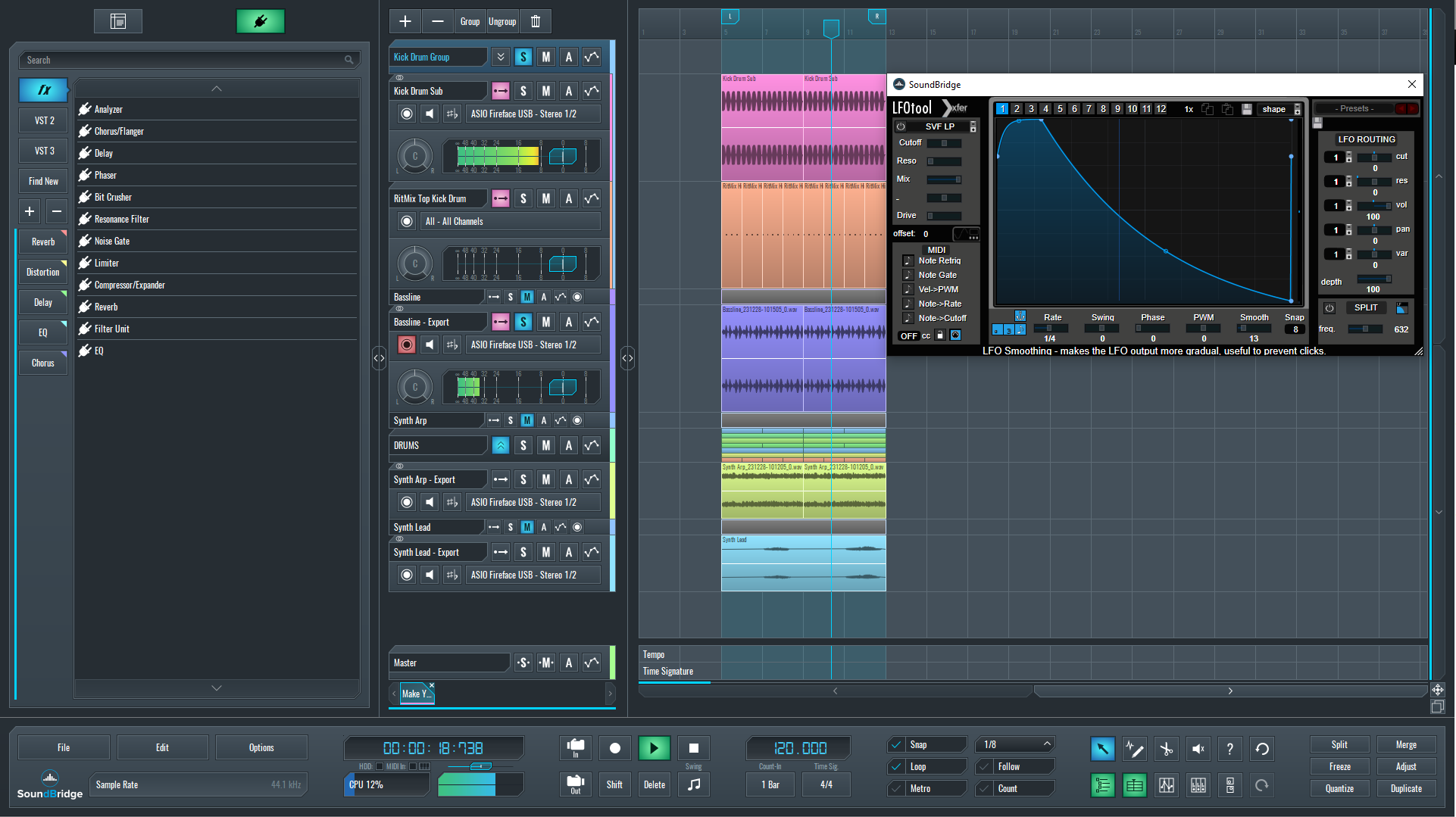
As I have shown in the image above, we have significantly reduced the kick drum's tail by shortening the envelope's decay time. Following that, we observed that the punch of the kick drum was too prominent. To that end, we increased the attack time, as shown at the beginning of the envelope form. All this has resulted in a much tighter relationship between the kick drum and bassline, as you can hear from the audio example below.
~Kick Drum - Solo (Processed)
~Kick Drum & Bassline - Solo (Processed)
In conclusion, please remember that this process can be successfully applied to other drum elements. You can apply it to basically any other sound that you feel is too long. Finally, listen to the full mix with the processed kick drum group channel.
~Full Mix - Kick Drum (Processed)
If you liked this article about audio processing, here are some more on the same subject:
- Take Control of Your Sub Frequencies
- Introduce a Vintage Feel to Your Instruments
- Process Plucked String Instruments in Your Mix
- Apply Volume Automation to Your Vocals
MASTER MUSIC PRODUCTION
Expert-led courses designed to take you from fundamentals to finished tracks.

HOUSEFrom bouncy bass and solid kicks, this course teaches you the most modern House music production techniques needed to succeed and stand out.

TRAPQuit sounding like generic Trap and produce something World with hints of the Far East. Create ethnic soundscapes to put your Trap ahead of the curve.

AMBIENTProduce relaxing, sophisticated psy-influenced ambient. Psychedelic and relaxing to listen to, create meditative soundscapes to put your listeners in Zen.