

Music Production Tips for Beginners That Actually Work
Last Edited: May 27, 2026
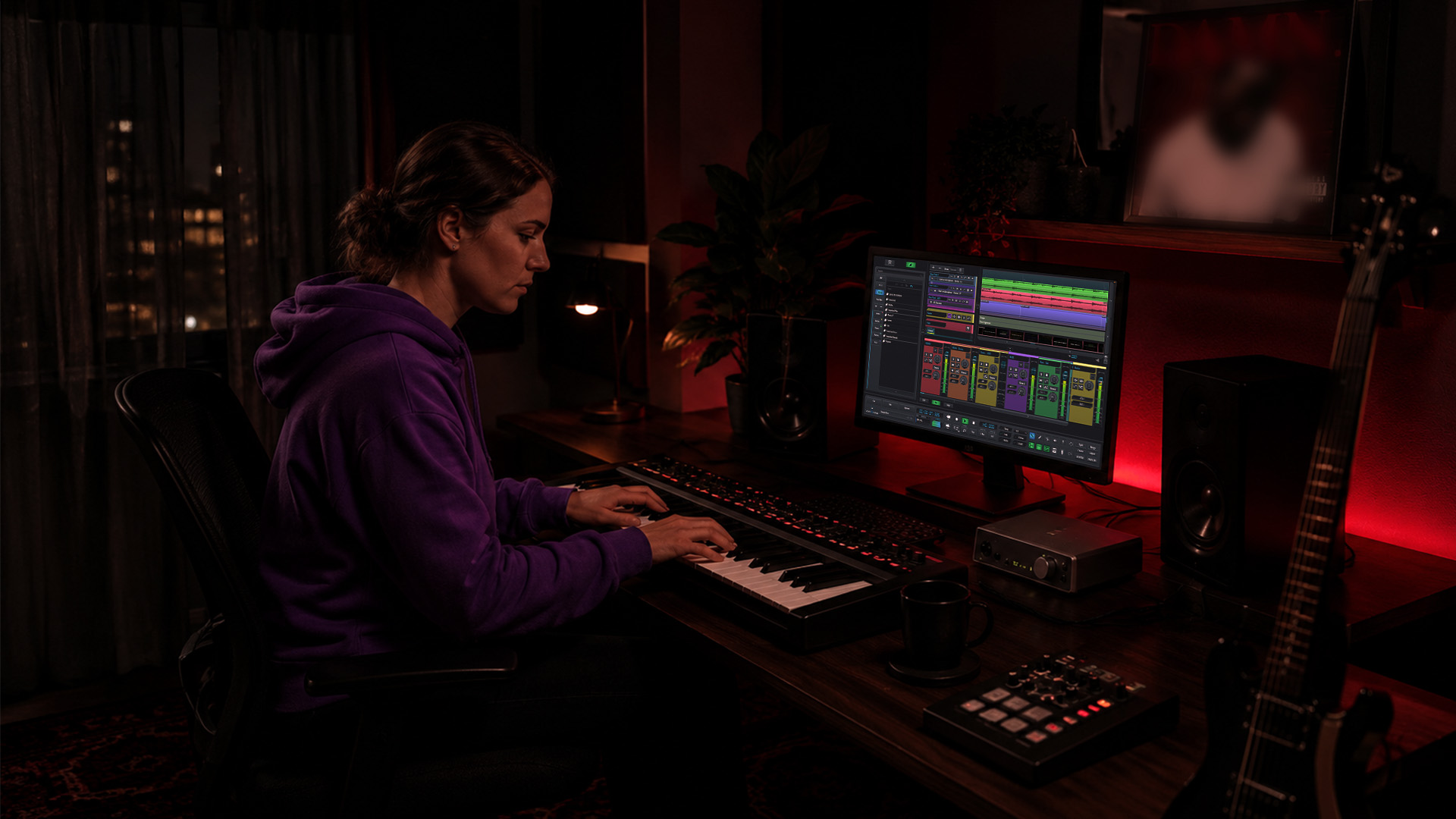
Starting music production feels like standing in front of a massive mixing board with no manual. There are thousands of tutorials, hundreds of plugins, and no shortage of conflicting advice. If you’ve ever opened your DAW and felt instantly overwhelmed, you’re not alone. These music production tips for beginners cut through the noise and give you a focused, practical path forward. No gear obsession. No endless theory. Just the habits, tools, and techniques that actually move the needle when you’re just starting.
Key Takeaways
| Point | Details |
|---|---|
| Master one DAW first | Commit to a single DAW for 30 days before exploring other tools or plugins. |
| Finish tracks, always | Completing tracks builds arrangement and decision-making skills faster than any tutorial. |
| Use the 1:3 learning ratio. | For every hour spent watching tutorials, spend three hours actually producing music. |
| Mix in mono first | Balancing your core elements in mono prevents frequency clashes before they start. |
| Fix one issue per track. | After each finished song, identify your biggest weakness and target it specifically next time. |
1. Choose One Daw and Commit to It
The single biggest trap beginners fall into is DAW hopping. You spend two weeks in one program, get frustrated, switch to another, and repeat. Nothing gets made. Nothing gets learned.
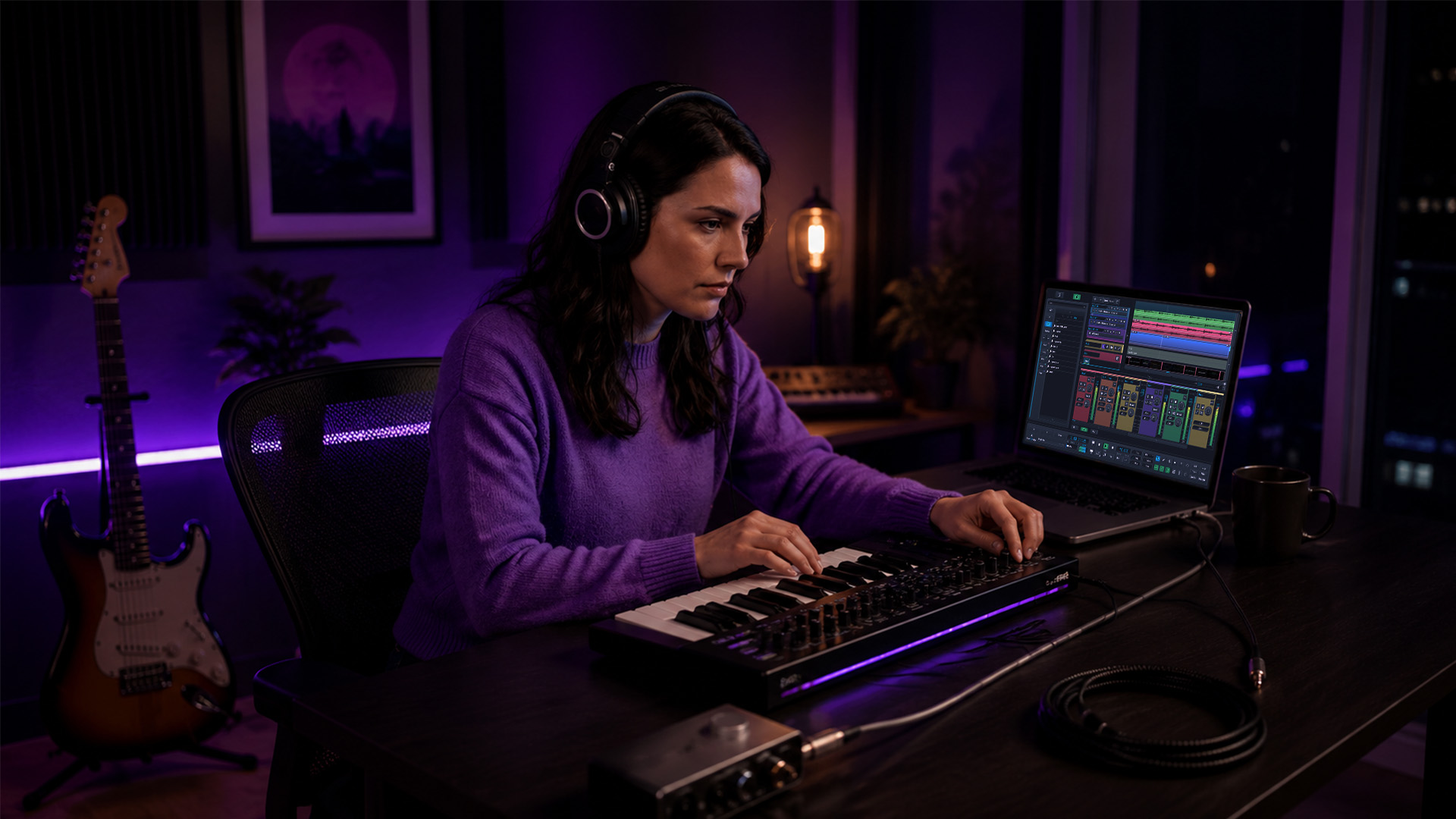
Pick one DAW and stay with it for at least 30 days. Seriously. About 20 hours of focused practice are needed to grasp the basics, and 3 to 6 months of regular sessions are needed to finish tracks with confidence. You can not compress that timeline by switching software.
Here are the core functions to master in your first month:
- Clip editing: Cut, move, and trim audio and MIDI regions without thinking about it
- Arrangement view: Understand how your song sections map out over a timeline
- Level balancing: Keep your mix from clipping by managing volume relationships
- Panning: Push elements left and right to create space in the stereo field
- Basic automation: Draw in volume and filter moves to add life to static loops
Pro Tip: Unlock the essential DAW features for your chosen platform before downloading a single third-party plugin. Stock synths, EQs, and compressors will teach you more about sound design than any expensive purchase.
If you’re unsure which platform suits your computer setup, the Mac or Windows DAW comparison is a solid starting point.
2. Build Your First Track With This 7-Step Recipe
Structure kills the blank-page panic. When you sit down without a plan, you noodle for 45 minutes, save nothing, and call it a bad session. When you follow a clear recipe, you walk away with something real.
Here is the 7-step formula that gives beginners a repeatable path to a finished track:
- Set your tempo and key. Lock in a BPM and root note before anything else. This decision shapes everything that follows.
- Build your drum foundation. Start with a kick and snare pattern. Solid kicks and a crisp snare give your track a heartbeat worth building on.
- Add your bass. A bouncy bass line locks to the kick and creates the low-end groove. Keep it simple. One or two notes per bar can carry a whole track.
- Layer your chords. Choose a pad, piano, or pluck sound. Three or four chords in a simple loop give your track harmonic identity.
- Write your melody. Build it above the chords. This is your hook. It does not need to be complex. Five notes repeated with small variations can be deeply memorable.
- Arrange the sections. Drop elements in and out to create intro, verse, chorus, and breakdown sections. Energy contrast is what keeps listeners engaged.
- Export a rough mix. Bounce a file and listen back on headphones, earbuds, and phone speakers. This reality check will tell you exactly what needs work.
Use reference tracks early in this process, not just at the mixing stage. Load a professional track you admire and compare your energy levels, kick weight, and arrangement length from the beginning. It recalibrates your ears before you go too far down the wrong road.
3. Adopt Smart Practice Habits for Faster Growth
More hours in the studio do not automatically mean faster improvement. The producers who grow fastest are the ones who practice with intention.
After every finished track, write down the three things that bothered you most. Maybe the low end felt muddy. Maybe the arrangement lost energy in the second half. Maybe your snare got buried. Fixing one key issue per track builds a compounding skill set far more effectively than just producing volume.
- Keep a running list of recurring problems in your tracks
- Rank them by impact: what would make your music noticeably better if fixed?
- Focus your next session specifically on solving that top issue
- Once it’s solved consistently, move down the list
Pro Tip: The recommended ratio for skill growth is 1 hour of tutorials for every 3 hours of actual production. More screen time watching other people produce will not transfer to your hands. Get into the session.
This approach also keeps motivation high. Finishing tracks, even rough ones, gives you wins. Small wins stack into confidence. Confidence turns into creativity.
4. Understand Mixing and Arrangement Basics
Most beginner mixes sound crowded. The instinct is to add more: more layers, more effects, more reverb. Almost always, the fix is to remove something instead.
Here is a quick comparison of common beginner mixing approaches versus what actually works:
| Beginner habit | Better approach |
|---|---|
| Mix immediately in stereo | Start mixing in mono to catch frequency clashes early |
| Layer 4-5 synths for thickness | Use 1-2 well-chosen sounds with EQ to carve space |
| Bury the kick under the bass | Use EQ side-chain or high-pass on the bass to let the kick punch through |
| Apply heavy reverb to everything | Reserve reverb for specific elements; keep your kick and bass dry |
| Build one long repeating loop | Create contrast with drops, risers, and filtered sections to vary energy. |
Learning to make instruments punch through a mix is largely about subtraction. Cut frequencies that are not needed rather than boosting what you want louder. This keeps your headroom intact and your mix translating well on different speakers.
Arrangement is also where most beginner tracks stall. A typical four-minute track needs an intro that builds tension, a main section that delivers the payoff, at least one breakdown that strips things back, and an outro that closes cleanly. That contrast, the rise and fall of energy, is what keeps a listener engaged all the way through.
5. Use Technology and Tools to Beat Creative Blocks
One of the most underrated pieces of advice for novices in music production is this: you do not have to build everything from scratch. Pre-made drum loops and AI-generated grooves are legitimate tools for getting unstuck and learning arrangements faster.
When you drop a great-sounding loop into your project, you free your brain to focus on layering, melody, and arrangement. You learn what a well-constructed groove feels like. That is a valid skill. You can always replace the loop later once you know how to program the same energy from scratch.
A few habits that keep your sessions productive:
- Set a session structure before you start. Decide in advance whether you’re writing drums, working on a melody, or mixing. Vague sessions produce vague results.
- Use consistent workflow routines to reduce startup friction. Open the same template, set your metronome, and load a reference track. Same ritual, every time.
- Timestamp tutorials while watching them. Write down the specific technique with the time code. Return to it during your production hours and apply it immediately.
- Avoid gear accumulation before skill development. Over-investing in equipment before you’ve built core skills leads to wasted money and misplaced confidence.
The goal is momentum. Beginners who build a simple workflow first and learn tools gradually are far more likely to stick with production long enough to get genuinely good.
6. Master Core Stock Plugins Before Anything Else
There is a myth in beginner music production circles that the right plugin will fix your sound. It won’t. Stock instruments and effects in most modern DAWs are exceptional, and learning them deeply is the fastest path to a unique, personal sound.
Every DAW ships with a synthesizer, an EQ, a compressor, and a reverb. Those four tools, used with real understanding, can produce professional-sounding tracks. When you master the envelope on your stock synth, you start to hear the difference between a punchy pluck and a slow-attack pad. When you understand how a compressor shapes transients, your drums suddenly sit in the mix the way you always wanted.
Push yourself to spend your first three months using only what came with your DAW: no outside packs, no third-party plugins. The constraint forces creativity and builds a deep understanding of signal flow, gain staging, and sound design fundamentals. Those skills carry over to every piece of gear or software you use afterward.
My Take on What Actually Moves Beginners Forward
I’ve watched a lot of people start music production with serious ambition and stall out within three months. The pattern is almost always the same. They spend the first weeks watching tutorials, then start hunting for better plugins, and finally redesign their studio setup. Actual tracks? Zero.
What I’ve found, again and again, is that the producers who improve fastest are the ones who obsessively finish tracks. Not perfect tracks. Not polished tracks. Just finished ones. A track that goes somewhere, builds, and ends. That process teaches you more about music production than 50 hours of passive learning ever will.
The uncomfortable truth is that most beginner habits, watching more tutorials, buying more gear, tweaking sounds endlessly without committing, feel like progress but aren’t. Real progress looks like a hard drive full of completed tracks, each one slightly better than the last.
My advice: set a goal of finishing one track per week for your first 30 days. They’ll be rough. That’s fine. You’ll learn how to make a bouncy bass line sit with a solid kick, how to build tension in an arrangement, and how to make decisions quickly. Those skills compound. The confidence they build is real and lasting.
— Wake
Take Your Production Further With SoundBridge
You’ve got the mindset and the framework. Now you need the right environment to put it all into practice.
SoundBridge is built for exactly where you are right now. Whether you’re programming your first drum pattern or sketching out your first full arrangement, the platform gives you an intuitive interface, zero-latency remote recording, and the kind of high-fidelity audio processing that makes every session feel professional. The audio editing automation guide is a perfect next step once you’ve nailed your basic workflow. And when you’re ready to go deeper, the essential DAW features tutorial walks you through the tools that separate beginner tracks from polished ones. Start free at SoundBridge and build your sound today.
FAQ
How long does it take to learn music production?
Most beginners need about 20 hours to grasp DAW basics and 3 to 6 months of regular practice to consistently produce decent tracks.
What DAW should a beginner start with?
Pick any major DAW and commit to it for at least 30 days. The best DAW is the one you actually use and learn deeply, not the one with the most features.
Should beginners buy plugins right away?
No. Master your stock plugins first. Stock synths, EQs, and compressors in modern DAWs are powerful enough to produce professional tracks and will teach you signal flow and sound design far better than third-party purchases.
How do I improve faster as a beginner producer?
Follow the 1:3 tutorial-to-production ratio and fix one specific weakness after every finished track. Volume of finished tracks compounds your skills faster than any other method.
Why do my mixes sound muddy?
Start mixing in mono and focus on EQ-ing the frequency separation between your kick and bass. Most muddy mixes stem from too many elements competing in the same frequency range, not from a lack of the right gear.
Recommended
MASTER MUSIC PRODUCTION
Expert-led courses designed to take you from fundamentals to finished tracks.

HOUSEFrom bouncy bass and solid kicks, this course teaches you the most modern House music production techniques needed to succeed and stand out.

TRAPQuit sounding like generic Trap and produce something World with hints of the Far East. Create ethnic soundscapes to put your Trap ahead of the curve.

AMBIENTProduce relaxing, sophisticated psy-influenced ambient. Psychedelic and relaxing to listen to, create meditative soundscapes to put your listeners in Zen.