

Professional Virtual Studio Solutions for Audio Teams in 2026
Last Edited: Jul 28, 2026
What Makes a Professional Virtual Studio Solution Worth Your Time?
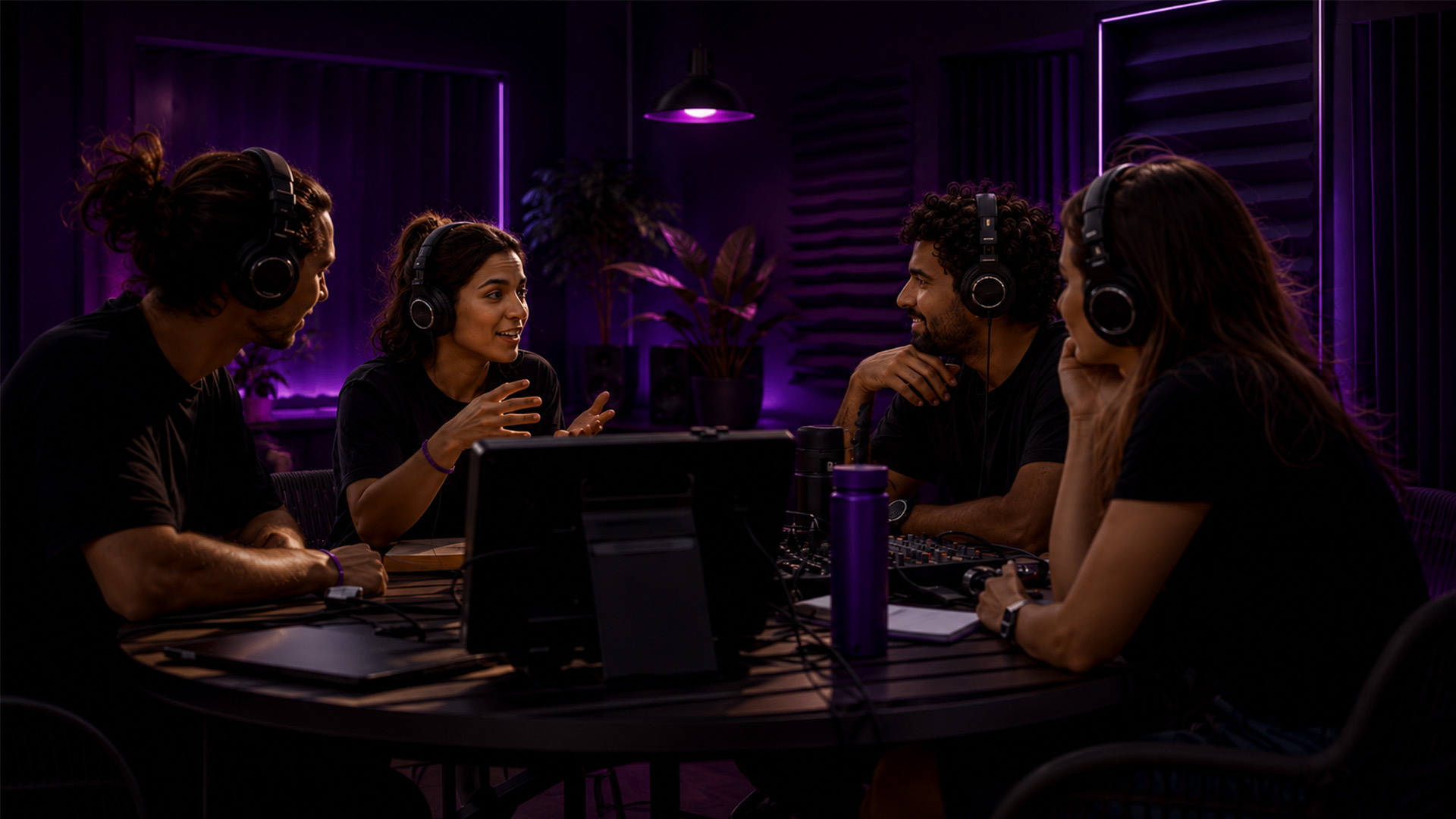
Professional virtual studio solutions are integrated platforms that combine high-fidelity audio streaming, real-time visual production tools, and cloud computing resources to replicate and often exceed what a physical studio delivers. The best platforms in 2026 support 24-bit/192kHz audio fidelity and frame-accurate synchronization, putting remote sessions on equal footing with in-room recording. For audio professionals and production teams, that’s the baseline, not a bonus.
Here’s what a capable virtual studio platform delivers at the professional tier:
- Multi-channel audio routing with support for up to 128 channels and full metadata synchronization, plus 16-channel Dolby Atmos workflows
- Real-time visual integration including chroma-keying, camera tracking, and 3D environment rendering
- Cloud-based GPU workstations for on-demand rendering power without owning the hardware
- Talkback and IFB systems that operate independently of the main broadcast or recording feed
- TPN compliance and encryption as baseline security for protecting intellectual property
- Flexible pricing across pay-per-session, usage-based, and enterprise contract models
- Scalable team access from solo producers to large distributed crews
SoundBridge exemplifies this tier, offering zero-latency remote tracking, 192kHz sample rate support, integrated video and talkback, and availability on both Mac and Windows.
How Core Technologies Power Today’s Remote Studio Workflows
Modern virtual studios run on a stack of interlocking technologies. Understanding what each layer does helps you evaluate whether a platform will hold up under real production pressure.
- Real-time chroma-keying and camera tracking are the visual foundation. By keying out a green screen and synchronizing camera movement with a virtual 3D environment, productions achieve photorealistic sets that would be physically impossible to build. Platforms using Unreal Engine for 3D rendering reduce latency and synchronization errors compared to older compositing pipelines.
- GPU-accelerated virtual workstations let your team access server-grade rendering power from any device. No render farm to manage, no hardware that ages out mid-pro—no.
- Synchronization protocols handle frame-accurate alignment between audio, video, and metadata streams. Without these, even a few milliseconds of drift compounds into audible and visible errors across a session.
- Dedicated network paths, separate from general office traffic, are required to maintain low-latency multi-channel audio and 4K video without jitter. Shared bandwidth is the fastest way to kill a remote session.
- Metadata management keeps session data, markers, and routing information consistent across every collaborator’s view in real time.
Pro Tip: The most successful virtual studio setups make the technology invisible. When your team stops thinking about the infrastructure and starts thinking about the music, that’s when the creative work gets good.
Virtual studios also expand what’s creatively possible. Immersive photorealistic environments that would cost a fortune to build physically become a few clicks in a well-configured virtual production workflow. That’s a genuine creative advantage, not just a cost argument.
Audio Quality and Workflow Features That Separate Pro Platforms From the Rest
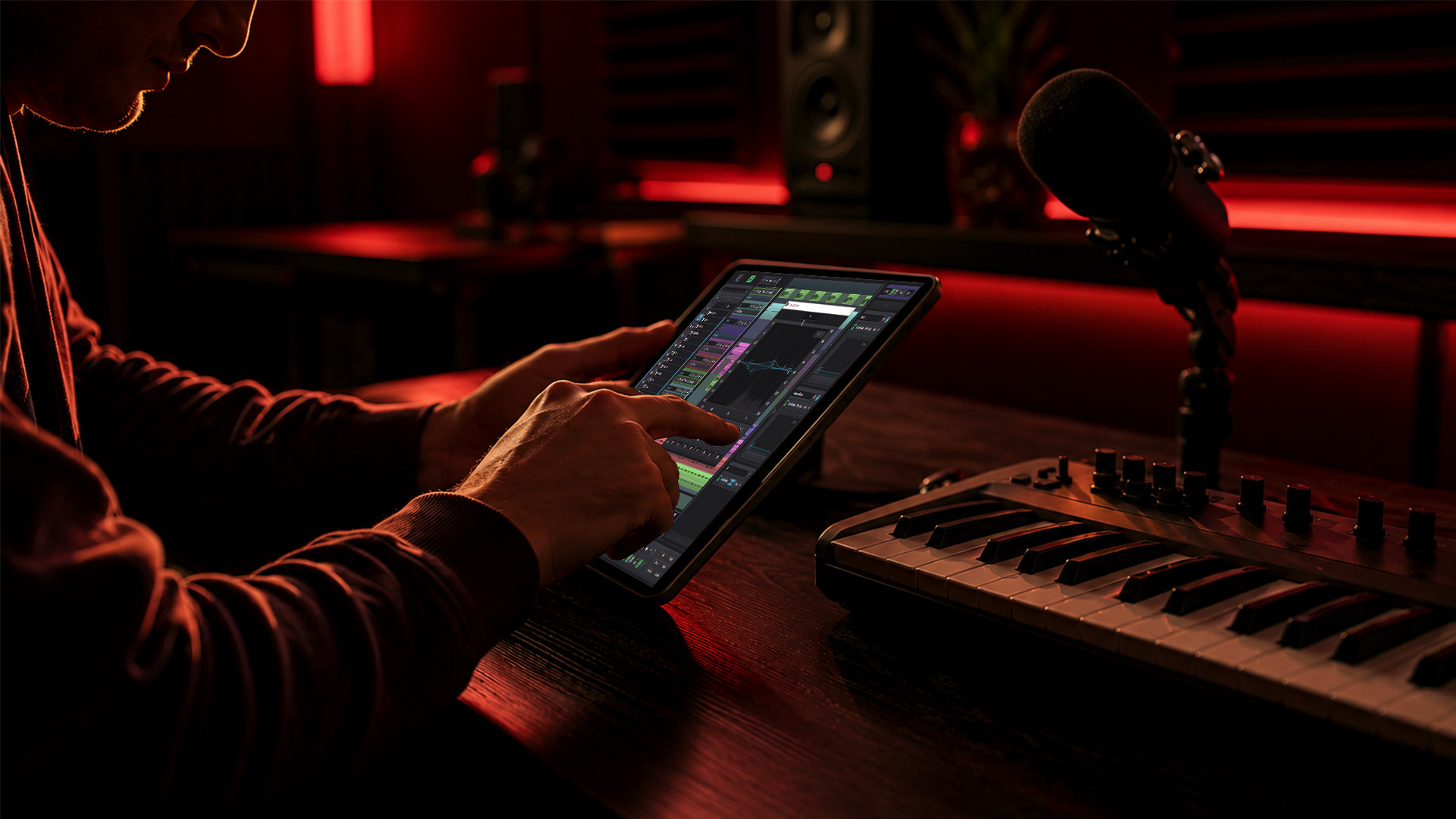
The gap between a consumer collaboration tool and a professional virtual studio comes down to audio standards and workflow depth. Many teams assume remote setups compromise quality. They don’t, when the platform is built right.
- 24-bit/192kHz fidelity is the professional benchmark. Platforms that cap at lower sample rates or bit depths introduce a ceiling that shows up in post-production, especially on orchestral, film scoring, or immersive audio projects.
- Dolby Atmos support requires up to 16 channels of audio with full metadata synchronization. That’s a hard technical requirement for any team delivering spatial audio content.
- Talkback and IFB systems must function independently from the main recording or broadcast feed. Independent talkback lets directors and engineers communicate without bleeding into the talent’s headphones or the live mix.
- Session transcripts, timecoded markers, and routing controls give producers a documented, navigable record of every session decision. That matters on long-form projects where continuity across sessions is critical.
- Hardware and software compatibility with NDI, Dante, AES67, SDI, and HDMI inputs and outputs means your existing signal chain doesn’t need to be replaced.
- TPN compliance and multi-layer encryption are the security floor for any platform handling unreleased content. Protecting intellectual property in a cloud environment requires both digital and physical security layers.
- Scalability from a single producer to a 50-person distributed crew, without changing platforms or rebuilding workflows, is what makes a solution genuinely professional rather than just capable.
The cloud-based DAW landscape in 2026 has matured to the point where remote audio editing matches in-studio quality when these standards are met.
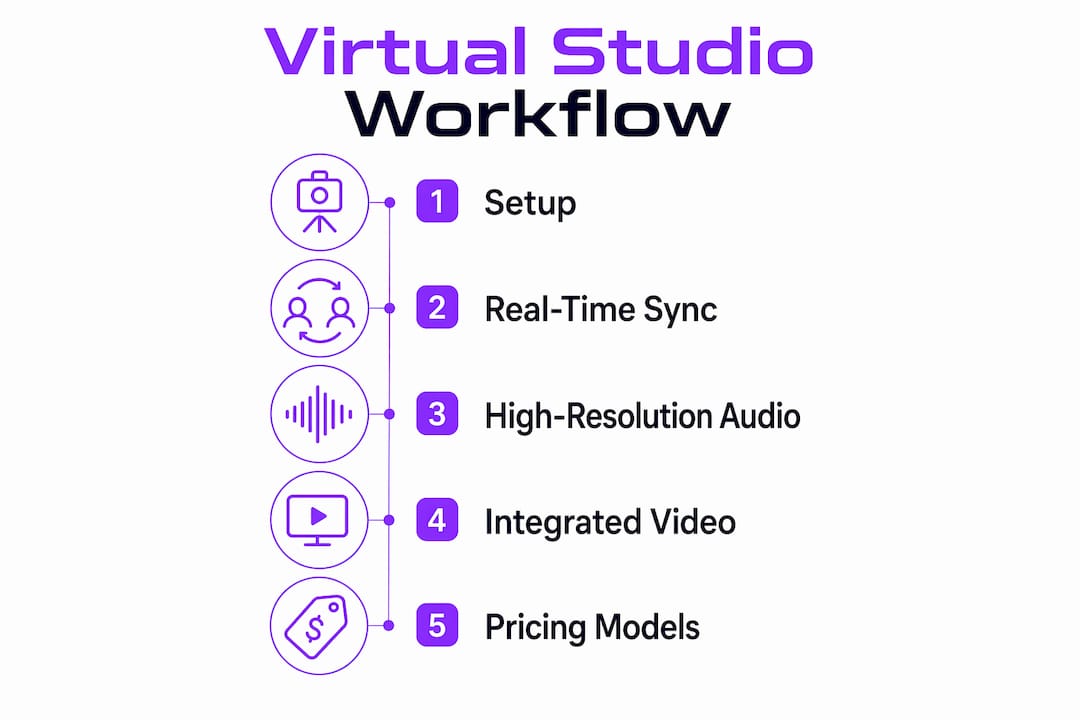
How Pricing Models Work for Virtual Studio Platforms in 2026
Three primary pricing models define the virtual studio market right now: pay-per-session, usage-based subscriptions, and enterprise contracts. Each fits a different production reality.
- Pay-per-session suits freelancers and smaller teams with variable project loads. You pay for what you use, with no minimum commitments or seat fees. Zero financial lock-in means you can test a platform without a budget risk.
- Usage-based subscriptions work well for mid-size teams with consistent but fluctuating workloads. Costs scale with volume, so a busy month costs more and a quiet one costs less. This model rewards efficiency.
- Enterprise contracts are built for studios and broadcasters running continuous productions. Fixed costs, dedicated support, and custom configurations justify the commitment at that scale.
The smartest teams evaluate pricing against infrastructure savings. Owning and maintaining render farms, dedicated audio hardware, and physical studio space carries ongoing costs that cloud-based virtual studio services eliminate. When you factor in hardware refresh cycles and IT overhead, the per-session or subscription cost often looks very different.
Transparent pricing, with no hidden seat fees and clear per-unit costs, signals that a platform was built by people who understand production budgets. Platforms that bury costs in enterprise negotiations are harder to evaluate and harder to trust.
What SoundBridge Brings to Professional Virtual Studio Work
SoundBridge is built for the audio professional who needs a full production environment without the friction of a traditional studio setup. Its zero-latency remote tracking means you can record a vocalist in another city with the same timing accuracy you’d get in the same room. The platform records and processes at up to 192kHz, matching the professional-grade fidelity standard that post-production and broadcast workflows demand.
- Integrated video and talkback keep your session communication tight without patching in a separate conferencing tool.
- Bi-directional plugin and hardware control means your outboard gear stays in the loop during remote sessions.
- Native video support and advanced time-stretching make SoundBridge a strong fit for film scoring and sound design, not just music production.
- Customizable workflows adapt to solo producers, small teams, and larger collaborative projects.
- Mac and Windows availability, with both free and paid tiers, removes the platform access barrier for engineers at any stage.
The virtual collaboration workflow SoundBridge enables is designed around one idea: the technology should disappear so the creative work can take over. That’s the same principle the best virtual studios are built on, and it’s what separates a tool you use from a tool you trust.
For teams exploring remote music collaboration, SoundBridge’s feature set covers the full production chain, from tracking to mixing to delivery.
SoundBridge Is Ready When Your Next Session Is
Your next project doesn’t need a physical room. It needs a platform that handles 192kHz audio, keeps your team in sync across time zones, and gets out of the way when the creative work starts.
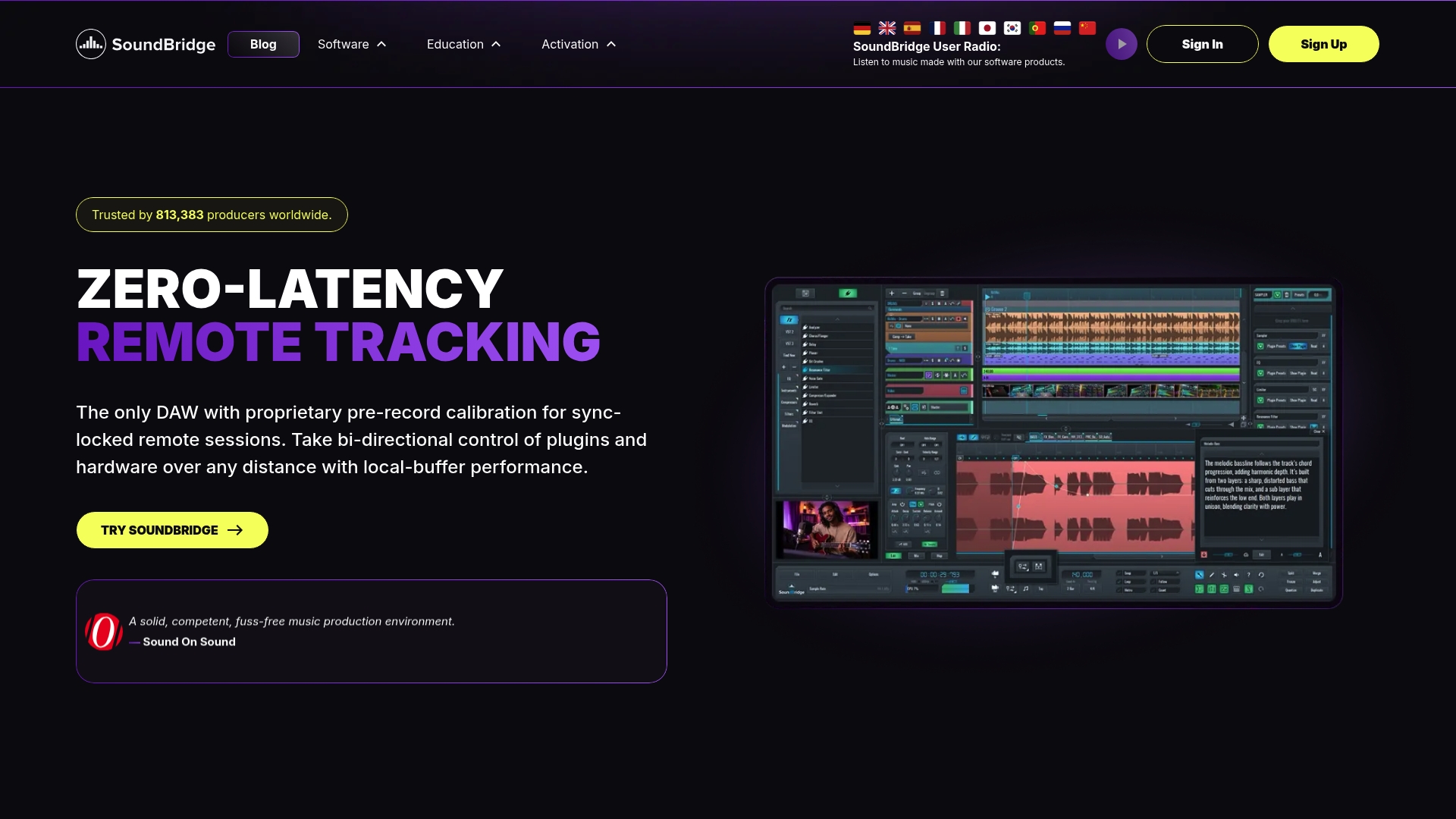
SoundBridge gives producers, engineers, and musicians a professional DAW environment with zero-latency remote tracking, integrated talkback, and native video support, all without the overhead of a traditional studio. The free tier lets you start immediately. The paid tiers scale with your production demands. Whether you’re scoring a film, tracking a band across three cities, or mixing a Dolby Atmos project, SoundBridge is built for exactly that kind of work. Try it at soundbridge.io and hear the difference a purpose-built remote studio makes.
Key Takeaways
Professional virtual studio solutions deliver studio-grade audio quality, frame-accurate synchronization, and flexible pricing that make remote production a genuine alternative to physical studio work in 2026.
| Point | Details |
|---|---|
| Audio fidelity standard | Professional platforms support 24-bit/192kHz audio and up to 128 channels with full metadata synchronization. |
| Security requirements | TPN compliance and multi-layer encryption are the baseline for protecting unreleased content in cloud environments. |
| Pricing flexibility | Pay-per-session, usage-based, and enterprise models let teams match costs to actual production volume. |
| Technology foundation | Real-time chroma-keying, camera tracking, and Unreal Engine rendering reduce latency and synchronization errors. |
| SoundBridge fit | SoundBridge delivers zero-latency remote tracking, 192kHz processing, and integrated talkback on Mac and Windows. |
Recommended
MASTER MUSIC PRODUCTION
Expert-led courses designed to take you from fundamentals to finished tracks.
HOUSEFrom bouncy bass and solid kicks, this course teaches you the most modern House music production techniques needed to succeed and stand out.
TRAPQuit sounding like generic Trap and produce something World with hints of the Far East. Create ethnic soundscapes to put your Trap ahead of the curve.
AMBIENTProduce relaxing, sophisticated psy-influenced ambient. Psychedelic and relaxing to listen to, create meditative soundscapes to put your listeners in Zen.