

Garage Rock
Last Edited: Feb 8, 2024
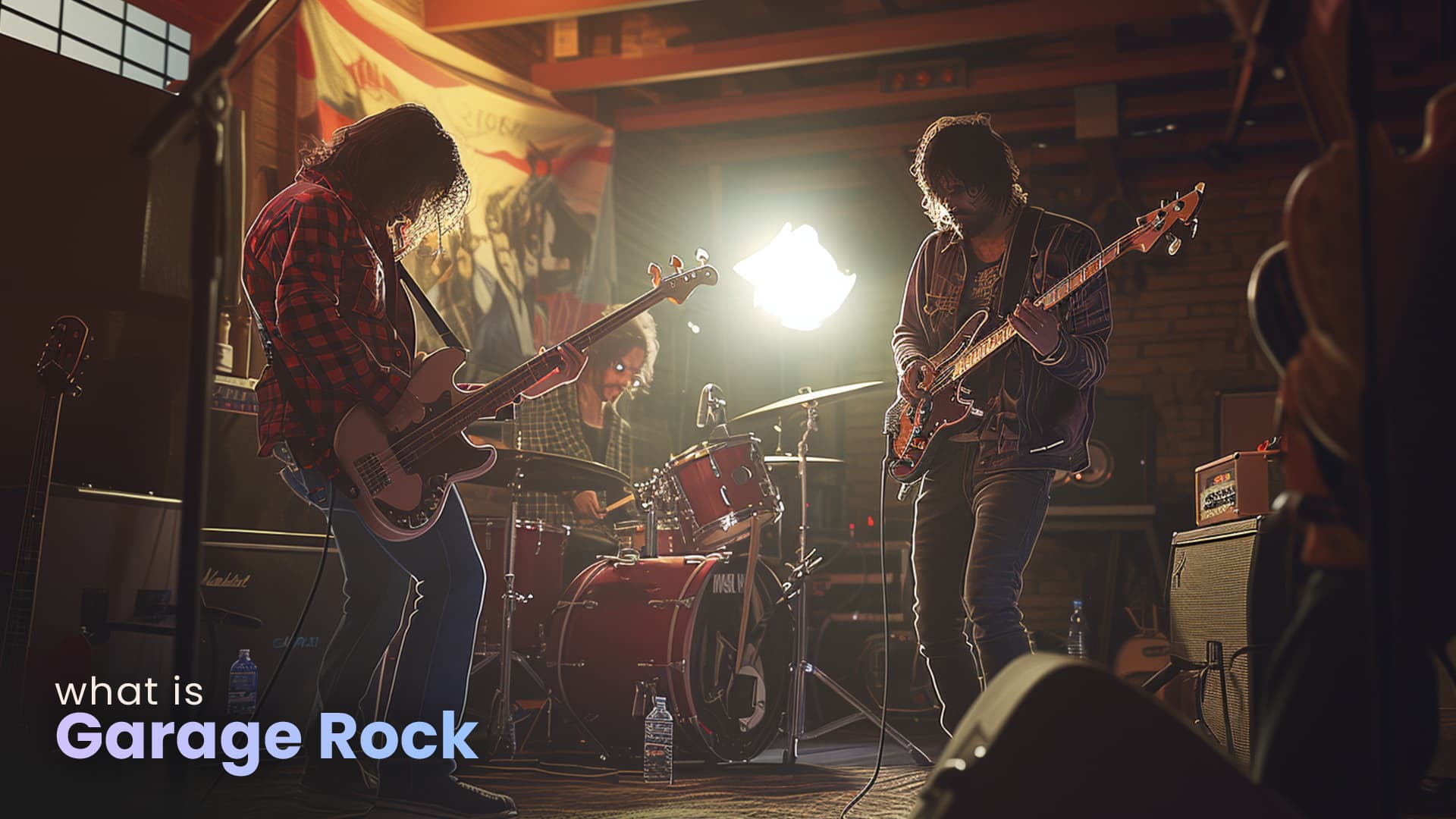
Garage Rock is a genre of Rock music that prioritizes enthusiasm and vigor over sheer technical skill. These bands typically have musicians with limited formal training but a great deal of raw energy. "Garage Rock" denotes a period when non-professional musicians had limited opportunities to use professional recording studios. They would occasionally practice and record in actual garages.
Origin of Garage Rock
Garage Rock, stemming from its roots in early Rock 'n' Roll and incorporating elements of psychedelia, has undergone numerous transformations. Rock 'n' Roll was popular in the late 1950s and early 1960s. This inspired numerous individuals without formal music education to play instruments such as guitars and drums. The British Invasion was a wave of 1960s British bands that swept into America. It began with the success of the Beatles and Rolling Stones and was a source of inspiration for young people.
Although several British bands had some prior musical experience, others were still considered '60s garage bands. These groups include the Equals, the Dave Clark Five, the Zombies, Gerry and the Pacemakers, the Pretty Things, Herman's Hermits, the Troggs, and the Yardbirds. Others like the Who and the Kinks would become independent legends.
Garage Rock In America
The Americans who emerged alongside the British bands were more inclined to be completely self-taught. Notable examples include unprocessed musical groups hailing from California, such as the Count Five (renowned for their track "Psychotic Reaction"), the Seeds (recognized for their composition "Pushin' Too Hard"), and the Standells (celebrated for their song "Dirty Water" which references Boston, while originating from Los Angeles). Additional triumphs of American garage bands encompassed the Sonics (arising from Tacoma, Washington), the Castaways (hailing from Minneapolis), the Shadows of Knight (based in Chicago), and Paul Revere and the Raiders (originating from Idaho and subsequently relocating to Oregon). During the late 1960s and early 1970s, the emergence of garage rock in the Detroit region, mainly through bands like the Stooges (led by vocalist Iggy Pop) and Question Mark and the Mysterians, laid the foundation for the subsequent development of punk music.
In New York City, the garage rock culture became closely associated with punk, primarily due to influential figures such as Patti Smith and the Cramps. There have been several garage rock comebacks since the late 1960s and early 1970s. This sometimes means returning to the original garage hits, such as those included on the Nuggets album from 1972—some honor garage rock by fusing it into their compositions. Pop and complex rock influences have been used by bands like the White Stripes, Jet, the Hives, the Strokes, and the Killers, who have drawn inspiration from 1960s garage and 1970s proto-punk bands.
Characteristics
Garage rock bands' raw emotion and strength were evident in their songs. Even if they lacked the technical skill of Jeff Beck or Jimi Hendrix, guitarists like Dave Davies of the Kinks or Tony Valentino of the Standells could nonetheless connect with audiences. The fact that many non-professional musicians could follow along with these tunes contributed to the appeal of garage rock. Simple, repetitious songs like "Double Shot (Of My Baby's Love)" by the Swingin' Medallions and "Wild Thing" by the Troggs served as a model for a lot of other garage tunes. Famous bands like the Rolling Stones also adopted this method, using single-string guitar riffs on songs like "Satisfaction."
If you enjoyed this article, please check out the following:
MASTER MUSIC PRODUCTION
Cursos com especialistas para levar você dos fundamentos a tracks finalizadas.
HOUSEDe baixos saltitantes a kicks sólidos, este curso ensina as técnicas mais modernas de produção House para você vencer e se destacar.

TRAPPare de soar como Trap genérica e produza algo World com toques do Extremo Oriente. Crie paisagens étnicas para pôr o seu Trap à frente da curva.

AMBIENTProduza ambient relaxante e sofisticada com influência psy. Psicadélica e relaxante de ouvir, crie soundscapes meditativas para pôr os seus ouvintes em Zen.