

Layered Synth Sounds
Last Edited: Dec 8, 2023
I am sure you have probably found yourself sitting in front of your favorite VST synthesizer numerous times, scrolling down through presets, and not finding the right big and wide sound. However, by using layering techniques, you can achieve a sound that impacts and balances your mix. In most of today's favorite electronic music genres like House, Trance, Dubstep, and D&B, the big and wide synth sound you hear is mainly based on the sawtooth waveform. This particular waveform is suitable for making sounds from bass to mid-range and for high-pitched synth leads and pad sounds. For this reason, I will use this waveform for the demonstration in the following tutorial.
Layered Synth Sounds Technique
It seems to me that a good technique is to divide copies of your synth across the frequency spectrum. This prevents phasing issues caused by overlapping frequencies, especially in the low-end. Let's start by making 3 separate sounds: low, mid, and high. This will cover most of the frequency spectrum. In MIDI language, the low end of the spectrum is approximately C-2 to C1, the mid-range is C2 to C5, and the high end is C5 to C8. Most VST synthesizers are set by default to this specification. Remember, the "true" pitch triggered by these notes may vary depending on the plugin's publisher and whether or not the patch is transposed +/- an octave.
Low Range
This is your starting point – where you choose the right sound for a PHAT low-end. In most cases, waveforms like "sawtooth "and "sine" will provide the best result. Record your desired sequence in your piano roll with a synth of your choice. After that, select a "bassy" sound that you like. The sound will usually be monophonic and contain just one simple oscillator. Enable a low pass filter to pass roughly 300 Hz and below. [audio wav="https://soundbridge.io/wp-content/uploads/2016/10/Audio-example-1-Low-Range-sound.wav"][/audio] ~Low Range sound
Mid Range
Copy the sequence you played from the instance above and move it to another track. We will start with a sawtooth oscillator for this part of our layered synth. Later, we will add a few effects like bit crusher and distortion to get more grit in the mid-range. Drop the sequence down an octave and subtly offset the other just a few "cents" to introduce some "beating." High-Pass filters the synth at roughly 300 Hz. This will occupy your low-mid and midranges.
~Mid Range sound
High Range
Finally, let's copy the sequence once more from the channels above. However, we can add more notes and form a chord in this case. This high-range synth will also consist of a couple of sawtooth oscillators or one of the variations of it that we can find in Massive by Native Instruments. We will end it by adding some additional reverb and delay and cutting the low end.
~ High-Range sound
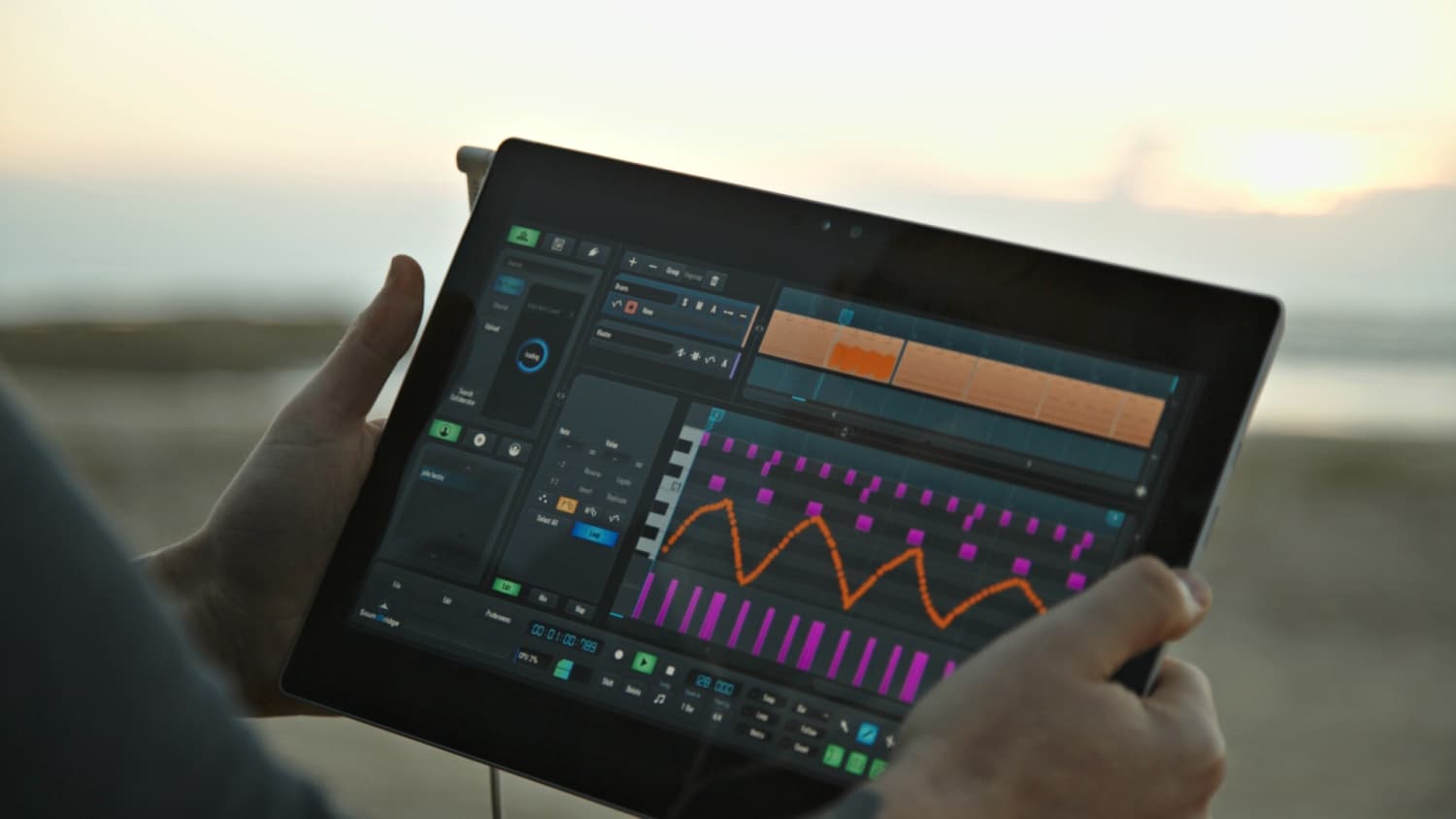
Lastly, after mixing all three layers properly, a good choice would be to group them by making a new group track within Lumit. We can add some EQ-ing on this track or place a side chain or ducking effect plugin. We must glue the layered synth line with the rest of the previously made rhythm. Now that we have made a solid synth group, let's hear how it sounds solo and with rhythm as a full mix.
~Full Synth Group with Side Chain effect
~Full Mix

MASTER MUSIC PRODUCTION
Cursos com especialistas para levar você dos fundamentos a tracks finalizadas.

HOUSEDe baixos saltitantes a kicks sólidos, este curso ensina as técnicas mais modernas de produção House para você vencer e se destacar.

TRAPPare de soar como Trap genérica e produza algo World com toques do Extremo Oriente. Crie paisagens étnicas para pôr o seu Trap à frente da curva.

AMBIENTProduza ambient relaxante e sofisticada com influência psy. Psicadélica e relaxante de ouvir, crie soundscapes meditativas para pôr os seus ouvintes em Zen.