


Vocal Transition Trick for Breakdowns and Drops
Last Edited: Apr 24, 2026
Transitions in electronic music are often overloaded with external effects: risers, impacts, white noise sweeps, and layered FX that momentarily increase energy before the drop. While effective, these elements are often disconnected from the track's musical core. They function as additions rather than transformations. This vocal transition trick approaches the problem in a different way. Instead of introducing new material, we reshape an existing vocal fragment into a rhythmic, evolving bridge between sections. A single word or syllable becomes a modulation source for tension, groove, and movement.
In Afro, Organic, and Tribal-oriented production, vocals are rarely static lead elements. They are percussive, hypnotic, and textural. When processed with tempo-synchronized modulation, a short vocal phrase can shift from lyrical content into a rhythmic engine that builds anticipation before a breakdown resolves or a drop hits.
This guide explores how to execute this technique inside SoundBridge using Pancake by Cableguys as the primary modulation tool. Rather than relying on filter wobble or traditional automation sweeps, we will use amplitude modulation to create controlled rhythmic interruption. The goal is not distortion or chaos, but sculpted energy; tension that grows from the vocal itself.
By the end of this walkthrough, the vocal will no longer function as a static phrase. It will become a dynamic transitional device, capable of shaping the emotional arc between breakdown and drop without adding unnecessary elements to the arrangement.
Rethinking the Role of the Vocal in Transitions
Before applying any processing, it is necessary to redefine how the vocal functions inside the arrangement. In many productions, vocals are treated either as lead storytelling elements or as background textures. Rarely are they approached as structural tools. The Vocal Transition Trick is based precisely on that structural perspective.
To establish context, we will first listen to a short loop created in SoundBridge DAW. The vocal in this example is completely unprocessed; no reverb, delay, EQ shaping, or spatial effects of any kind. We intentionally made it sit dry and exposed in the arrangement. By removing all processing, we hear the vocal exactly as it exists in the mix, without coloration or enhancement.
We begin by listening to the loop within the full mix. This step allows us to understand how the vocals interact with drums, bass, and harmonic elements. We observe its rhythmic placement, transient shape, and natural energy before any manipulation takes place.
After that, we solo the vocal track. In isolation, subtle details become more apparent: the tail of the word, the consonants, the internal rhythm of the phrase. These microelements often determine whether a fragment can function successfully as a transition tool.
Working in this order (full mix first, then solo) ensures that every decision remains arrangement-driven. The goal is not to process the vocal because it sounds "empty," but to identify how its existing character can be transformed into controlled motion that connects sections without adding external material.
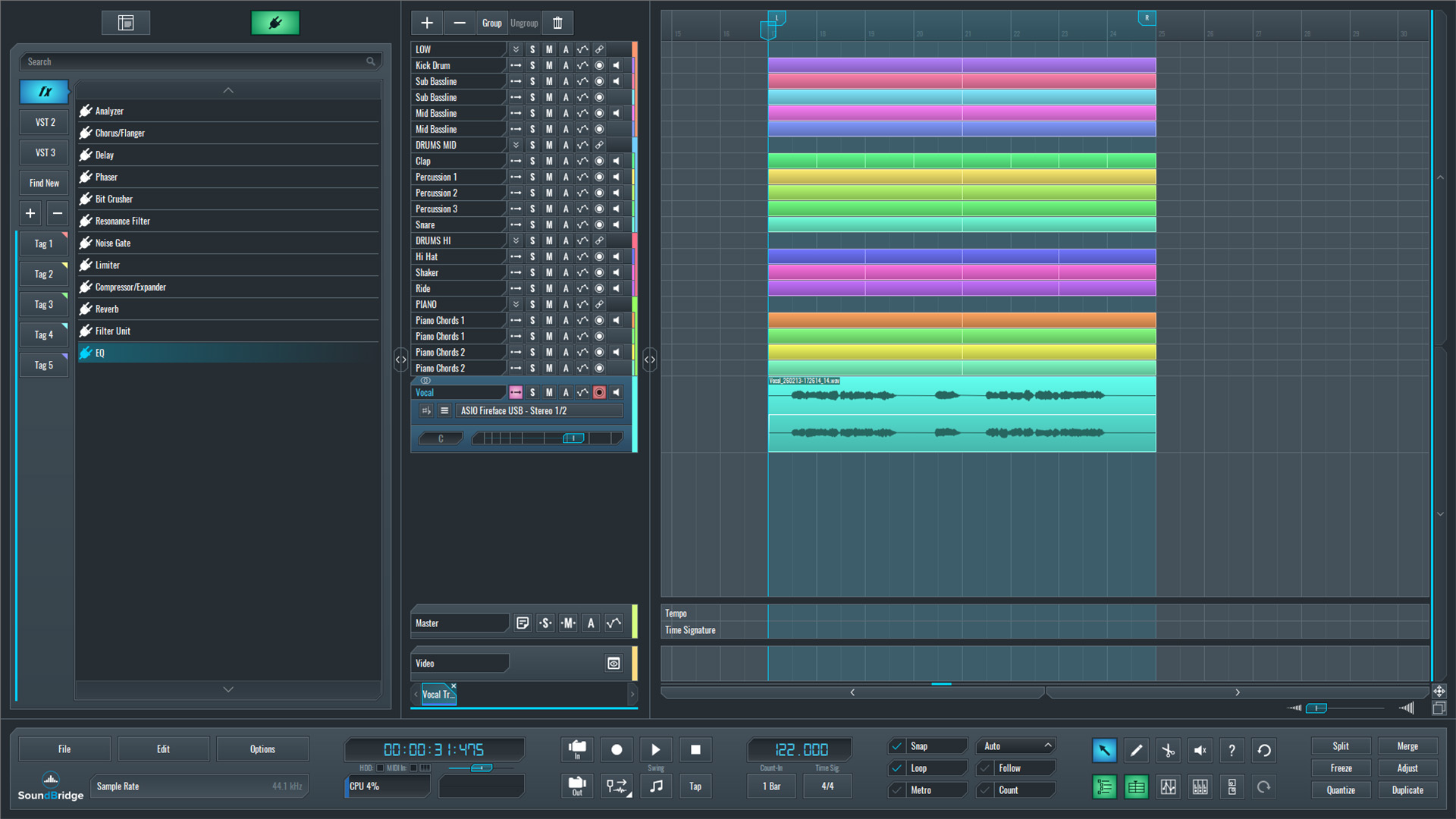
~Full Mix - Vocal (Unprocessed).
~Vocal - Solo (Unprocessed).
Capturing the Vocal Tail with Freeze Reverb
Insert the native SoundBridge reverb on the vocal channel and set the decay time to around four seconds. Keep pre-delay low and diffusion high to create a smooth, dense tail. We are not adding space; we are extracting harmonic material.
- Create a new audio track named Vocal Capture.
- In its routing select Audio In → Internal
- Select the vocal track
- Choose Stereo 1–2 – Reverb as the source
This routing ensures the new track receives only the processed reverb signal.
Set the reverb to 100% Wet. Play the full vocal phrase and listen for a vowel or sustained moment that produces a rich tail. At the right point, activate Freeze and record the sustained signal onto the Vocal Capture track.
The vocal is now converted into a frozen atmospheric layer, ready for modulation. We are going to place this frozen vocal part just before the drop, and additionally reverse it in the audio editor.
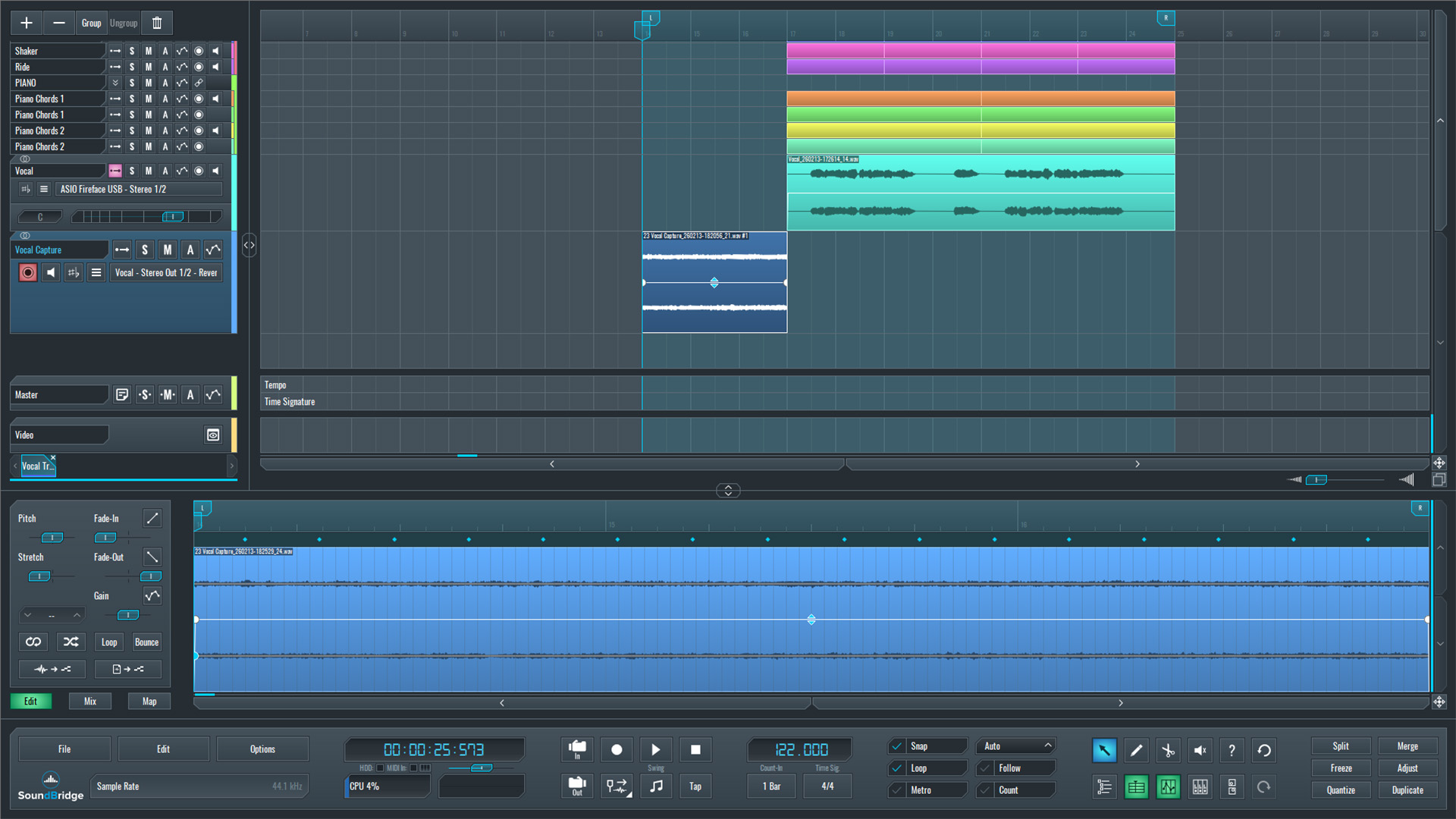
~Vocal - Reverb Tail Freeze + Reverse.
Rhythmic Modulation with Pancake
Now we move from sustain to movement.
Take the recorded Vocal Capture audio and trim it to fit the transition length (usually one or two bars before the drop). At this stage, it behaves like a static pad derived from the original vocal.
Insert Pancake on the Vocal Capture track and disable Sync. Enable Retrigger, so the LFO restarts consistently with playback. Now the modulation speed is defined in Hertz rather than musical divisions. At this point, the technique becomes more flexible.
The modulation begins faster, creating a dense, energetic pulsing at the start of the transition. As the drop approaches, we gradually reduce the Speed parameter in Hertz.
This deceleration changes the psychological perception of movement. Rather than building intensity through speed, we build tension through restraint. The pulses become wider and more spaced out, creating a sense of expansion just before impact.
Because the track tempo remains constant, the slowing modulation contrasts against the steady groove. That contrast increases anticipation. The listener feels a shift in energy without any additional elements being introduced.
By the final moment before the drop, the modulation is slow, controlled, and open, leaving space for the drums and bass to hit with clarity.
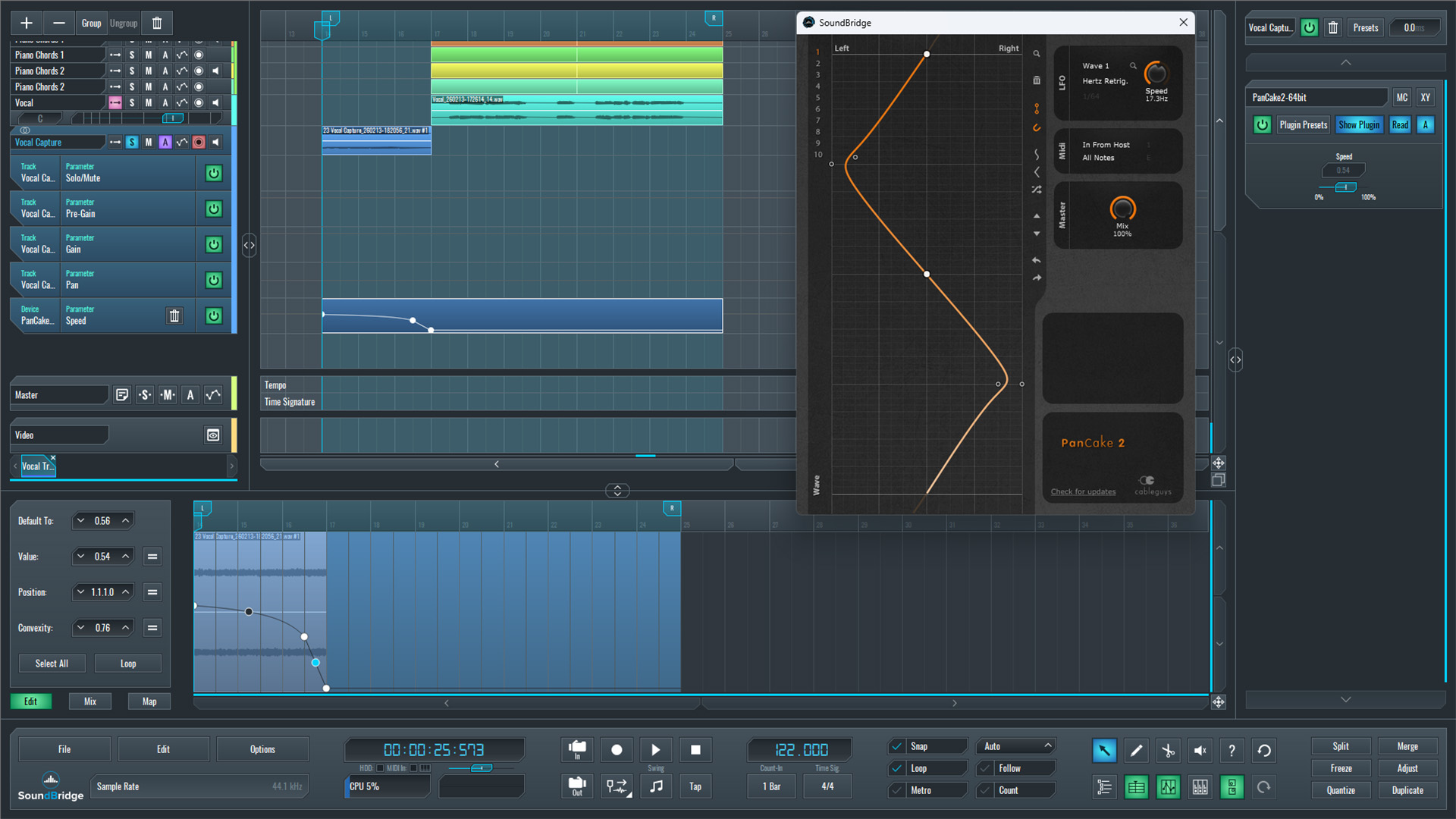
~Vocal - Rhythmic Modulation.
Finalizing the Vocal Transition Processing
After defining the modulation movement, we refine the vocal's tonal and spatial behavior.
Insert an EQ directly after Pancake and activate a low-cut filter. This time, the automation moves in the opposite direction: begin with a high cutoff value, removing most of the low and mid frequencies so the vocal sounds thin and distant at the start of the transition.
As the drop approaches, gradually lower the cutoff frequency. This automation reintroduces body and harmonic weight into the vocal texture. The sound moves from narrow and filtered to fuller and more grounded. That downward motion creates a sense of arrival rather than lift, reinforcing impact when the drums and bass enter.
Below the EQ, insert another reverb on the same channel, using the same settings as the original vocal reverb used earlier. This additional layer maintains the spatial identity.
Maintain a moderate wet level during most of the transition. In the final moment before the drop, automate the Wet parameter to increase to the max, allowing the reverb to bloom and leave a sustained tail.
When the drop hits, the core elements enter cleanly while the reverb tail continues underneath, maintaining cohesion between sections without overwhelming the transient energy.
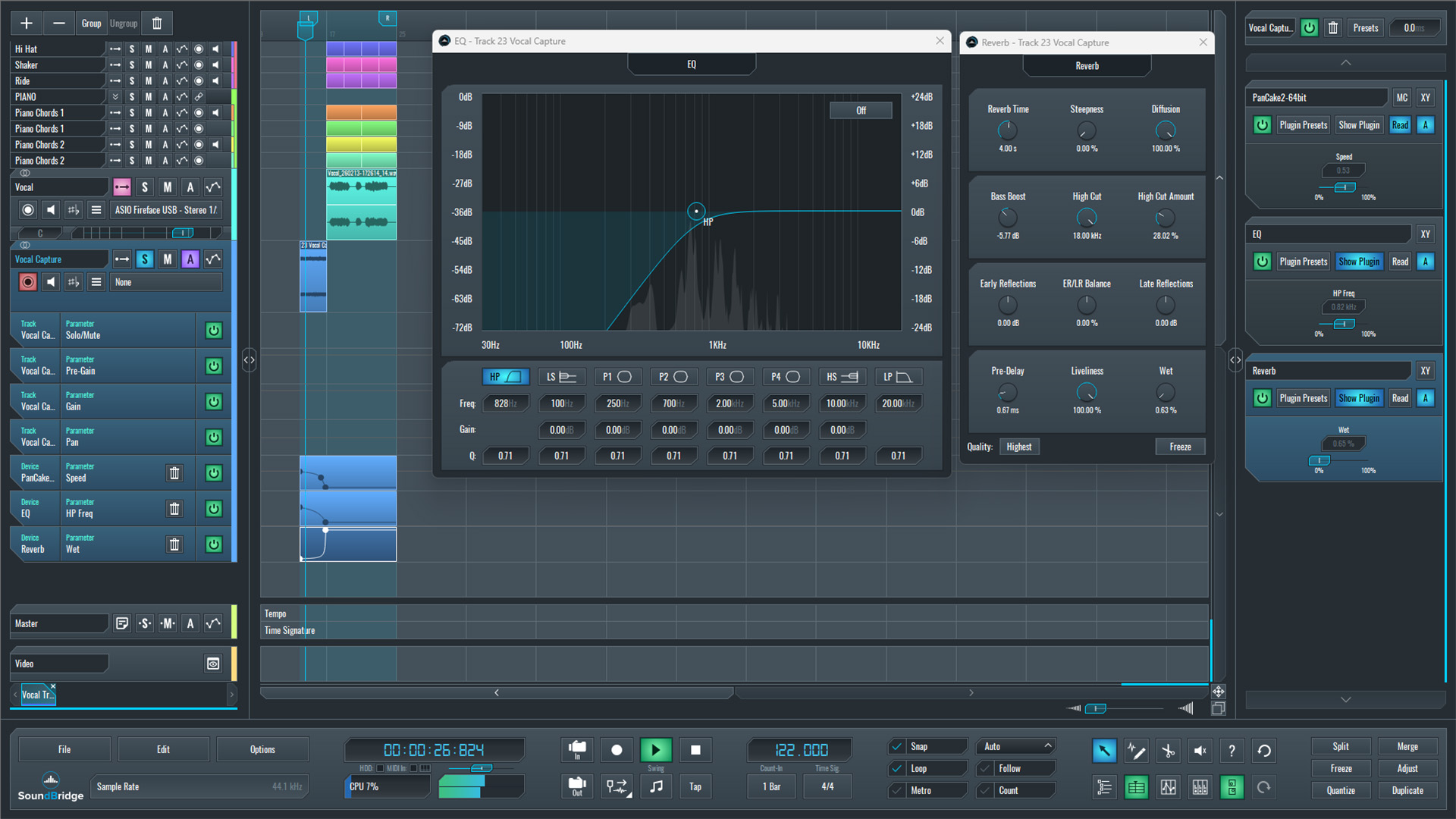
~Vocal - EQ & Reverb Automation.
Adding Finishing Touches
As a final step, we return the processed vocal to the full mix. Up to this point, we have worked in isolation, capturing the frozen tail, shaping its amplitude, controlling tonal weight with low-cut automation, and defining spatial depth with reverb. Now the focus shifts from sound design to the impact of arrangement.
We begin by playing the transition in context with drums, bass, and harmonic elements. The goal is to evaluate balance rather than effect intensity. The modulated vocal should not dominate the mix; it should sit inside it, functioning as a controlled tension layer. Listen to how the slowing modulation interacts with the groove. The pulses should feel intentional, not random. The gradual reintroduction of low frequencies should feel like grounding energy rather than adding muddiness.
Pay attention to space. As the reverb wet level rises at the end of the transition, the tail should expand without masking the transient attack of the upcoming drop. If necessary, small adjustments in EQ or reverb decay can tighten the handoff between sections.
To complete the transition, we introduce two subtle yet supportive elements just before the drop: a white-noise uplifter and a crash. The white noise should rise in volume during the final moments, reinforcing forward momentum and widening the stereo field. The crash is placed exactly at the drop point, acting as a transient marker that defines impact.
Final Thoughts
These additions are not meant to replace the vocal transition; they reinforce it. The vocal remains the core transitional device. The noise and crash enhance clarity and scale, making the drop feel complete and intentional.
Finally, listen to the entire section multiple times. Focus on emotional continuity rather than technical perfection. The effectiveness of this technique lies in its transformative power. A dry vocal phrase has been reshaped into an evolving, rhythmic structure that bridges two sections without introducing unrelated material.
When executed with restraint and precision, this approach creates transitions that feel organic, cohesive, and musically integrated. The energy does not come from external sources. It grows directly from the voice itself, and that is what gives the drop its weight and credibility.
~Full Mix - Vocal (Processed).
If you like this article, here are some more on the same subject:
ОСВОЙ МУЗЫКУ ПРОДАКШН
Курсы от экспертов, чтобы провести вас от базы до готовых треков.

HOUSEОт упругого баса и плотных киков — курс учит самым современным техникам House продакшна, чтобы преуспеть и выделиться.

TRAPХватит звучать как шаблонный Trap — делайте звучание World с нотами Дальнего Востока. Создавайте этно саундскейпы, чтобы ваш Trap был впереди.

AMBIENTДелайте расслабляющий, утончённый psy-ambient. Психоделично и спокойно для слуха — создавайте медитативные саундскейпы, чтобы увести слушателей в Zen.