

Sharing VSTs With Remote Partners Without the Headaches
Last Edited: Aug 20, 2026
Sharing VSTs with remote partners comes down to one move: host your plugin instances on a single studio machine and let your collaborators control them remotely, with bi-directional control and streamed UI/audio handling the rest. Nobody copies installers. Nobody hands over license keys. You just need the right setup.
- What you need: a host machine, a DAW with SoundBridge’s remote features, and a stable connection.
- What you get: zero installer transfers, zero license headaches, and your studio DSP never leaves your rig.
Pro Tip: Keep your control stream (UI, parameter tweaks) separate from your high-fidelity audio monitoring. Forcing one connection to do both is where most remote sessions fall apart.
Key Takeaways
Hosting plugin instances on one machine and separating control from audio streaming is the most reliable way to share VSTs with remote partners without touching a single installer or license key.
| Point | Details |
|---|---|
| Host locally, control remotely | Keep DSP on one studio machine and let collaborators send control events over the network. |
| Separate control from audio | Use dedicated control paths and streaming so that performance is never compromised in either direction. |
| Hit your network targets | Aim for under 30ms round-trip latency and low buffer sizes on the host. |
| Never transfer licenses | Host the plugin instead of copying installers or keys to a remote partner’s machine. |
| Start with SoundBridge | SoundBridge’s built-in zero-latency remote hosting and bi-directional plugin control are the workflow to test first. |
How Does Remote VST Hosting Actually Work?
Three roles run the show. The host machine runs the actual plugin DSP. The controller sends MIDI and GUI events across the network. The monitor receives the processed audio, either as a compressed stream or a high-fidelity return feed.
Picture the signal path this way: control events (mouse clicks, fader moves, MIDI notes) travel from the remote partner to the host, get processed by the plugin engine locally, and the resulting audio streams back separately from the UI feed. Two lanes, one destination.
- Control events travel light and fast.
- Audio and UI streaming need more bandwidth and tighter buffer management.
This is also why nobody’s license terms get violated. The plugin never leaves the host machine, so there’s nothing to install remotely or unlock on a second computer.
Which Solution Should You Try First?
SoundBridge’s built-in remote hosting and bi-directional plugin control are the workflow to try before anything else. It runs zero-latency remote tracking on top of studio-accurate sync, so a collaborator on the other side of the country can tweak a compressor on your host rig and hear the change land in real time, not a beat later.
- No plugin installers were copied to a second machine.
- Your DSP load stays on your own hardware, where it belongs.
- Integrated talkback and video mean you’re not juggling a separate calling app during your session.
This fits mix engineers running heavy chains and producers who don’t want to strip a session down to stock plugins to enable remote work. If your collaborator only has a laptop, they can still fully control a plugin chain that would crush their own CPU.
Pro Tip: Before your first real session, run a five-minute test with one plugin instance and one collaborator. It surfaces buffer and routing issues before they cost you a client’s time.
Anyone who’s tried bouncing stems back and forth over email knows the real bottleneck usually isn’t the network; it’s a host machine that’s underpowered for the plugin chain you’re running.
What Other Tools Work Alongside SoundBridge?
You won’t need a second tool for most sessions, but a few fill specific gaps well:
- Audio Movers (LISTENTO) and Waves Stream stream DAW audio at configurable latency and quality inside your existing signal chain. Good for a client who needs to hear a mix live.
- SessionWire and Vienna Ensemble Pro cover full session and instrument-hosting workflows for teams already standardized on those platforms.
- Cloud sync tools like OneDrive, Dropbox, or WeTransfer still matter for non-real-time stem transfers once a part is finished.
| Tool | Best for | Control vs. streaming |
|---|---|---|
| SoundBridge | Full bi-directional plugin control | Both are natively separated |
| Audio Movers / Waves Stream | Live audio monitoring | Streaming only |
| SessionWire / Vienna Ensemble Pro | Full session hosting | Both |
Match VST3, AU, and AAX compatibility on both ends before you commit to a workflow, and keep a preset-sharing habit going so nobody has to rebuild a chain from scratch.
How Do You Set Up a Live Remote VST Session?
Getting this right the first time saves you from having to chase dropouts mid-session. Work through this in order.
Host machine checklist:
- Confirm your CPU has headroom; remote hosting adds overhead on top of your normal plugin load.
- Use a dedicated audio interface with a driver you trust at low buffer sizes.
- Load your plugin bank and confirm that every plugin your collaborator needs is authorized on this machine only.
- Lock down remote user accounts with limited permissions, not full admin access.
DAW routing checklist:
- Insert SoundBridge’s remote-host plugin into the track you want to share.
- Route MIDI from the remote controller to that instance.
- Match sample rate and buffer size on both ends. A 48kHz session with mismatched buffers is the most common cause of “it sounds fine here but glitchy there.”
- Enable latency compensation so recorded takes land on the grid.
Network targets matter more than most people expect:
| Metric | Target |
|---|---|
| Round-trip latency | Under 30ms for live control, under 10ms for tracking |
| Bandwidth | 5 Mbps up/down minimum per stream |
| Buffer size (host) | low buffer sizes |
| Ports | Open the specific UDP/TCP ports your tool requires; use UPnP or manual forwarding if behind a strict NAT |
Verification steps:
- Run a loopback test: send a click track through the chain and confirm it returns clean.
- Check for drift after 10 minutes of continuous playback.
- Have your collaborator move a single fader and confirm the response feels instant, not delayed.
- If you hear dropouts, raise your receiver buffer incrementally rather than jumping straight to a large buffer that kills feel.
Pro Tip: *Test with a scratch project before your first paid session.
If you’re assembling or upgrading a host rig for this kind of work, a solid studio hardware checklist helps you avoid underspeccing the one machine everything now depends on.
What Roles and Habits Keep Sessions Productive?
Assign roles before you hit record, not during the session. The host engineer owns the DSP machine and the final routing decisions. The remote instrumentalist needs low-latency monitoring and minimal control surface clutter. The remote producer needs full plugin control access but doesn’t need to touch routing.
Build these habits into your workflow:
- Standardize track and preset naming so nobody has to guess what “Bus 3” does.
- Print audio to a stem only when a part is finished; staying live keeps revisions cheap.
- Set talkback etiquette upfront: mute when not speaking, unmute to comment.
A short numbered warm-up keeps momentum:
- Confirm connection and run the loopback test.
- Load the session and verify that all collaborators see the same plugin state.
- Do a two-minute pass through the arrangement before recording anything real.
Bi-directional control eliminates the file-bounce cycle entirely, so mixing decisions happen live rather than over three rounds of exported WAVs and email threads.
Pro Tip: Rehearse the full signal chain, MIDI included, at least once before a client-facing session. It’s the cheapest insurance against a dead-air moment with a paying client on the line.
What Are the Licensing and Security Rules?
One rule sits above everything else here: never copy or transfer plugin installers or license keys to a remote partner.
On the security side:
- Use encrypted tunnels for remote sessions, not open, unauthenticated connections.
- Limit remote accounts to session-specific permissions.
- Know what’s actually being transmitted: UI frames, control events, and processed audio, never raw plugin files.
- Keep session backups independent of your live connection.
Why this workflow protects creative momentum
Fewer upload cycles mean faster decisions. When a collaborator can nudge a compressor and hear it instantly, mixing stays in the moment rather than stalling in a render queue. That’s shorter sessions and sharper mixes.
Try SoundBridge’s Remote Hosting Workflow Today
SoundBridge built its remote collaboration features specifically for this problem: hosting plugin instances on one machine while a partner gets full bi-directional control, without a single installer or license key changing hands.
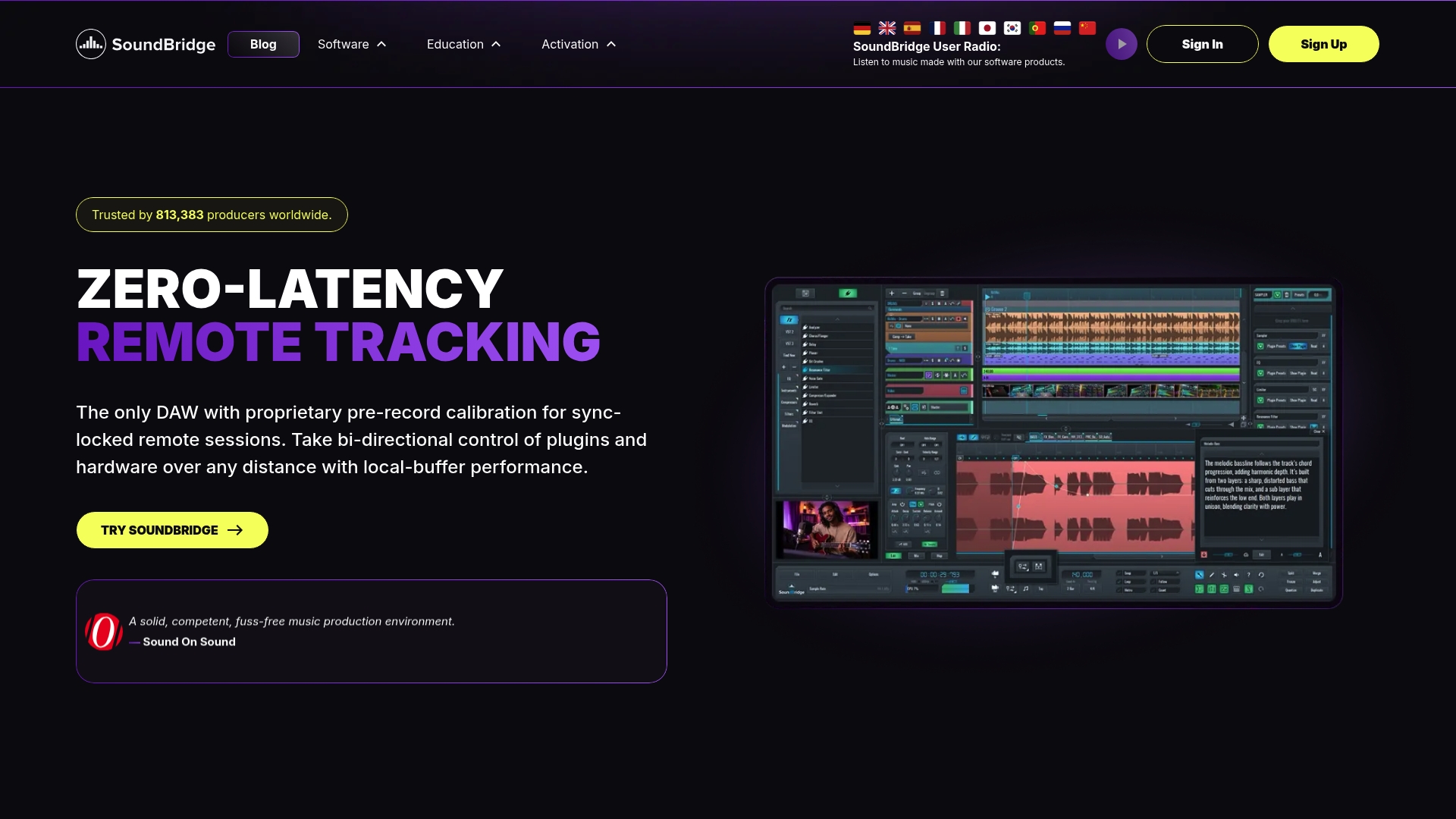
That means your DSP-heavy chains stay put on your rig, your collaborator hears a zero-latency return feed, and integrated talkback keeps you from tab-switching to a call app mid-session. It’s built for producers and engineers who’d rather spend session time mixing than managing file transfers. If you want to see how the remote collaboration features handle a real plugin chain, start with the SoundBridge DAW and run a test session with one collaborator before your next paid job.
Where to Read More on Remote VST Workflows
A few more resources round out this guide, depending on what you want to dig into next.
- SoundBridge’s virtual collaboration overview walks through the zero-latency tracking and bi-directional control features in more depth.
- The AudioGridder integration write-up explains the host/DSP model that underpins most remote plugin hosting setups.
- The cross-platform DAW collaboration guide covers Audio Movers and Waves Stream in more detail if plugin streaming fits your workflow better than full hosting.
- Expert tips for remote music collaboration cover session etiquette and configuration details that this guide didn’t have room for.
How is this different from just sharing plugin files? Sharing VSTs with remote partners through hosting means the plugin never leaves your machine. Your collaborator controls it remotely rather than installing a copy, which keeps you within your license terms.
Do both partners need the same DAW? No. The host runs the DAW and plugin, and the remote partner connects through SoundBridge’s control interface regardless of what they run locally.
What internet speed do I actually need? Aim for at least 5 Mbps up and down with round-trip latency under 30ms for control, tighter for live tracking.
Can I use this for a full band session, not just one instrument? Yes, as long as your host machine has the CPU headroom for every plugin chain running simultaneously. That’s usually the real limit, not the network.
Sources
Recommended
MASTER MUSIC PRODUCTION
Expert-led courses designed to take you from fundamentals to finished tracks.

HOUSEFrom bouncy bass and solid kicks, this course teaches you the most modern House music production techniques needed to succeed and stand out.

TRAPQuit sounding like generic Trap and produce something World with hints of the Far East. Create ethnic soundscapes to put your Trap ahead of the curve.

AMBIENTProduce relaxing, sophisticated psy-influenced ambient. Psychedelic and relaxing to listen to, create meditative soundscapes to put your listeners in Zen.